


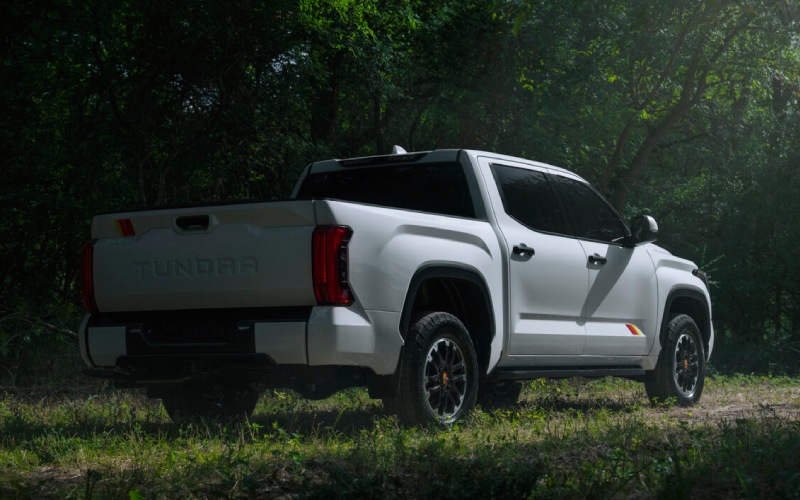
Pueblo Toyota – Why the 2026 Toyota Tundra’s Multi-Link Rear Suspension Just Works for Pueblo, CO Drivers
If you have ever driven a full-size truck that hops or jitters over cracked pavement, you know why suspension design matters. The 2026 Toyota Tundra answers that with a multi-link rear suspension using coil springs—an approach that transforms how a tough, body-on-frame truck can feel in daily use around Pueblo, CO. It is controlled and planted on I-25, calm over expansion joints through town, and reassuring when a dirt road to your favorite trail starts to ripple. Let’s unpack what makes this setup special and how it benefits real-world driving on the Front Range.
What Multi-Link With Coil Springs Changes Day to Day
Traditional leaf springs have served trucks well for decades, but they can introduce head-toss and bounce when a bed is unladen. Tundra’s multi-link rear with coil springs gives engineers more tuning variables—arm length, bushing compliance, and shock calibration—so the truck can maintain both control and comfort. The result is a pickup that keeps its composure over rough patches near downtown Pueblo and remains steady when road surfaces tilt or undulate on the way to Lake Pueblo State Park.
This suspension also plays well with Tundra’s strong frames and powertrains. When you accelerate hard with the i-FORCE or i-FORCE MAX system, the geometry helps the rear stay settled so you feel the torque surge forward without a lot of squat. And when you are towing, the extra lateral control you gain from the multi-link layout can help the truck track straight—welcome peace of mind when crosswinds pick up along open stretches south of Colorado Springs.
How It Benefits Towing and Payload
Tundra’s capability numbers are impressive—up to 12,000 pounds of max towing, and up to 1,850 pounds of max payload when properly equipped. What turns capability into confidence is control. The multi-link rear suspension is a big reason Tundra feels stable hooking up a boat or camper, especially when paired with available Trailer Backup Guide With Straight Path Assist. Backing down a ramp or reversing into a campsite near Pueblo Reservoir becomes a more deliberate, less stressful process, largely because the chassis responds predictably.
Likewise, the composite bed—available in 5.5-, 6.5-, and 8.1-foot lengths—adds durability without excess weight. That matters for suspension performance too: less unsprung and overall mass helps the shocks and springs handle undulating surfaces, whether you are carrying lumber for a weekend project or gear for a family getaway.
Technology That Rounds Out the Ride
Good suspension is the foundation, but Tundra layers in helpful tech. The available Panoramic View Monitor gives a 360-degree perspective, which is surprisingly useful when you are aligning to a trailer or squeezing into a tight spot downtown. The available 12.3-inch digital gauge cluster complements that by placing towing status, safety alerts, and off-road info in clear view. Together, these systems pair nicely with the poised ride to make long days at the wheel easier on you and your passengers.
Inside, the available 14-inch Toyota Audio Multimedia touchscreen keeps navigation, media, and vehicle settings front and center. Wireless Apple CarPlay and Android Auto compatibility help reduce cable clutter. After a few weeks of ownership, you notice that fewer small frictions—a cable here, a guess at a safety alert there—means you arrive more relaxed, even if your schedule takes you all over town.
Real-World Scenarios Where the Difference Shows
A few everyday moments make the multi-link difference clear. Turn onto a rutted alley behind your shop—Tundra stays composed and avoids excessive bed hop. Transition from city streets to the highway—body motions settle quickly instead of lingering. Navigate a gravel access road near the Arkansas River—rear-end chatter is reduced, and steering input stays more precise. It is not just ride comfort; it is consistency and control that help you focus on the task at hand.
And if you choose a model with the i-FORCE MAX hybrid powertrain, brisk torque off the line complements the controlled suspension feel. Pulling away from stoplights with a loaded bed no longer feels like a clumsy dance—power delivery meshes with chassis balance to keep the truck on an even keel.
Who Should Prioritize This Setup
If you split your time between work and family duties, haul on weekends, and drive varied surfaces around the Front Range, you will likely appreciate the current Tundra tune. Contractors and tradespeople who spend a lot of time in the cab will notice less fatigue at day’s end. Families will feel the smoother ride in the back seat. And weekend explorers who frequent trailheads west of town will enjoy a truck that stays settled on the way in and on the way out.
We also hear positive feedback from shoppers cross-shopping trucks with leaf-spring rears. While every design has tradeoffs, Tundra’s approach balances capability with comfort in a way that feels modern and considerate of how most owners actually use their trucks—especially across the mix of streets, highways, and unpaved roads that define our region.
How to Test This for Yourself
Set up a test route that samples a bit of everything: a couple of downtown turns, a quick hop on I-25, and a short stretch of rough pavement or a maintained gravel road. If you are planning to tow, ask to explore the available trailer-assist features and bring your hitch height measurements. Pay attention to how the rear end behaves over successive bumps and how quickly the body settles after a larger undulation. Check noise isolation on coarse pavement, and note steering response in a quick lane change. The more your test drive mirrors your routine, the better your decision will be.
When you are ready to dial in a build, you can tailor the experience further with TRD packages that add hardware and tuning aimed at off-pavement driving. In all cases, the multi-link rear suspension forms a confident base that gives those upgrades room to shine.
Frequently Asked Questions:
Does the 2026 Tundra’s multi-link rear suspension reduce bed bounce when unloaded?
Compared to traditional leaf-spring setups, many drivers report the Tundra’s multi-link with coil springs feels more settled and controlled on imperfect pavement when the bed is empty.
Will the ride quality still feel stable with a trailer attached?
Yes, the geometry provides reassuring lateral control, and when combined with available towing tech—like Trailer Backup Guide With Straight Path Assist—Tundra inspires confidence under load.
Can I pair the suspension with off-road upgrades?
Absolutely. Tundra’s TRD family options, including the TRD Pro trim, integrate specialized shocks, wheels, and tires that build on the multi-link foundation for increased control off pavement.
At Pueblo Toyota, we make it simple to evaluate these differences side by side and set up a drive route that reflects your day-to-day. Whether you prioritize the i-FORCE MAX powertrain’s torque, the available Panoramic View Monitor, or a specific TRD configuration, our team is here to help you sort the must-haves from the nice-to-haves and assemble a truck that makes sense for your life. We are proud of our role serving Pueblo, Florence, and Penrose with clear information and a straightforward process that respects your time.
The 2026 Toyota Tundra’s multi-link rear suspension is not a spec to gloss over—it is a major contributor to how the truck feels and performs. If ride composure, towing stability, and day-to-day comfort matter to you as much as raw numbers, it is worth a close look, a thoughtful test drive, and a conversation with a product specialist who understands the Front Range. That is where we come in, and that is where your next great truck decision can start.
If you have a current vehicle to trade, an online estimate helps you see the big picture early. From there, we can walk you through grades, bed lengths, cab styles, and the technology packages that best match your use case. Choosing a truck should feel exciting and clear—and with the 2026 Tundra, it can be both.
Stop by when you are ready to see how this suspension design, paired with modern towing tech and smart cabin integration, adds up to a truck that simply feels right for Pueblo. One drive is often all it takes to feel the difference.
When you reach out, mention which surfaces you want to sample on your drive—city streets, highway, or a maintained gravel road—and we will map out a route to match. That way, you will know exactly how Tundra behaves where you will drive it most.
In short, the 2026 Toyota Tundra’s multi-link rear suspension turns everyday roads into a demonstration of balance: strength without harshness, capability without compromise, and a refined ride that keeps up with the rest of the truck’s modern technology. That is a combination we value, and we think you will, too.
Pueblo Toyota
Request more 2026 Toyota Tundra information
Connect with us


Recent Blog Entries
- Can I get a manual transmission on the 2026 Toyota Tacoma near Florence, CO?
- Which 2026 Toyota Tundra bed length is best for daily life near Penrose, CO?
- Your Trusted Toyota Dealer near Colorado Springs, CO — Local Expertise, Easy Buying, and Lasting Support
- Which SUV Has the Better All-Weather Confidence for Families near Florence, CO — 2026 Toyota Grand Highlander or 2026 Honda Pilot?
- Which Truck Delivers Better Real-World Towing Confidence near Canon City, CO?