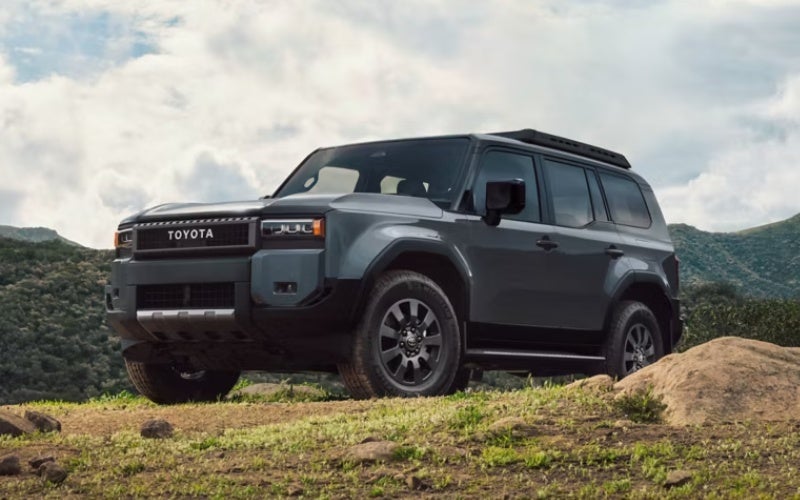


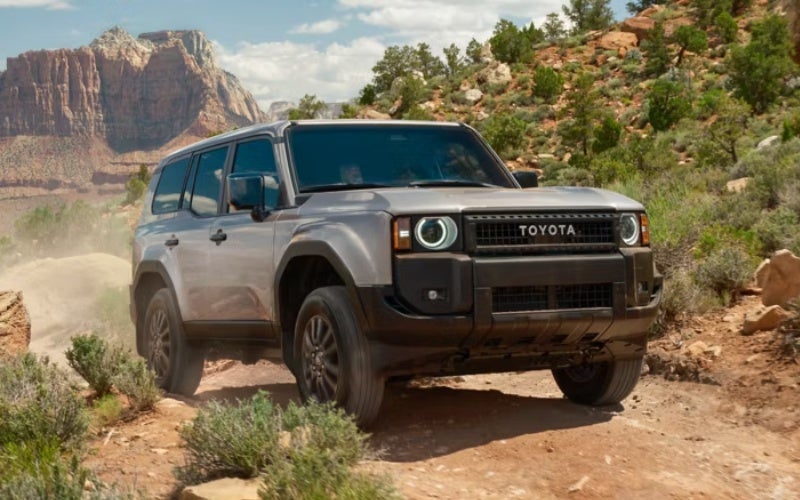
Pueblo Toyota - Canon City, CO Backroads Made Easy — How the 2027 Toyota Land Cruiser’s i-FORCE MAX Torque and Trail Tech Build Real Confidence Canon City drivers know how quickly a relaxed scenic route can turn into a steep climb, a loose gravel curve, or a rutted turnoff to a stunning overlook. The 2027 Toyota Land Cruiser feels like it was built precisely for those moments—seamlessly blending on-road comfort with hybrid torque and trail-defining tech. If you’re weighing your options for a do-it-all SUV in Southern Colorado, here’s a closer look at why Land Cruiser belongs on your short list. i-FORCE MAX: Power You Can Use Every Day The Land Cruiser’s i-FORCE MAX Hybrid powertrain pairs a turbocharged 2.4L engine with electric motor assistance for 326 net combined horsepower and 465 lb.-ft. of torque. That number is more than a spec—it’s a real difference-maker on Fremont County’s rolling grades and tight two-lane passes. Torque arrives early, helping the Land Cruiser surge up to merging speed on Highway 50 or ease past slow-moving traffic with a confident press of the pedal. Around town, the hybrid system’s smoothness stands out as you crawl through parking lots or idle in school pickup lanes—refined, composed, and ready to go when a gap opens. On unpaved stretches, that torque translates into secure traction and decisive momentum, especially when the road points upward. It’s the kind of dependable grunt you’ll appreciate when a washed-out section appears after a rain or when you’re threading your way toward a favorite fishing spot on the Arkansas River. Full-Time 4WD and the Right Tools for the Trail The Land Cruiser’s standard Full-Time 4WD continuously powers all four wheels for stable traction on mixed surfaces. But the hardware gets even smarter as you leave pavement. Standard Crawl Control (CRAWL) manages low-speed throttle and braking, so you can focus on the line ahead rather than feathering the pedals. Available Multi-Terrain Select (MTS) tailors traction control for specific surfaces—think mud, sand, or loose rock—while the available Multi-Terrain Monitor (MTM) uses camera views to bring low-speed obstacles into clear view. For drivers who like to explore Shelf Road or quiet spur trails west of town, the available Stabilizer Disconnect Mechanism (SDM) is a standout. With the front bar disconnected, you get improved wheel articulation that helps the tires stay in contact with uneven ground. Translation—more grip, less drama, and better control when the terrain gets choppy. Built for the Trip There and Back The Land Cruiser isn’t just about the trail. It’s about the return trip too—comfortable, quiet, and organized. Inside, available premium leather-trimmed seating brings an upscale feel that still looks ready for a rugged weekend. The 60/40 split rear seat lets you adapt quickly when plans change, while Qi wireless charging and USB-C ports keep everyone’s devices powered. Available Head-Up Display helps keep your attention ahead on winding routes, and if you love finding new angles for photos or scouting campsites, the available camera systems are more than party tricks—they’re tools you’ll use every time you go exploring. Meanwhile, Toyota Safety Sense™ 3.0 brings driver assistance features that chip away at fatigue on longer drives—adaptive cruise on open highway, lane support when winds kick up through the canyon, and forward collision mitigation you’ll never notice until it matters most. Hybrid Torque: 465 lb.-ft. for secure climbs and smooth passing Standard 4WD: Full-Time 4WD for year-round confidence on mixed surfaces Trail Support: Crawl Control standard, with available MTS and MTM Chassis Flex: Available SDM for better articulation on uneven terrain Towing Confidence: 6000-lb. capacity for small trailers, toys, or gear Canon City’s driving mix—urban errands, scenic routes, and spur-of-the-moment detours—suits the Land Cruiser’s personality. It’s an SUV that says yes to the day’s plan without compromises, equally at home in weekday traffic or at a trailhead where the pavement ends. Is the Land Cruiser the Right Fit for Your Drives? If you need a vehicle that comfortably handles daily life, makes quick work of mountain grades, and adds real confidence when the road goes rough, the Land Cruiser checks all three boxes. Its standard Full-Time 4WD and hybrid torque simplify the shopping equation—no chasing specific packages just to get the drivetrain and power you want. Layer in available trail tech and a comfortable, well-connected cabin, and you’ve got a go-anywhere, everyday solution that’s easy to recommend. Frequently Asked Questions: Does the 2027 Land Cruiser come with 4WD standard? Yes. Full-Time 4WD is standard, delivering continuous power to all four wheels for confident traction on pavement and dirt. What trail features are most helpful around Canon City? Standard Crawl Control is a great safety net on uneven, low-speed terrain. Available Multi-Terrain Select and Multi-Terrain Monitor add traction tuning and obstacle visibility, while available SDM improves articulation over ruts and rocks. Can the Land Cruiser handle towing a small trailer to weekend spots? With a 6000-lb. towing capacity and Trailer Sway Control, it’s ready for small campers, ATVs, or a utility trailer packed with bikes and gear. Our team is here to help you plan the right configuration for your routes and hobbies—simple, honest advice that’s grounded in how Canon City drivers actually use their vehicles. From test drives that mirror your daily roads to accessory guidance for bikes, kayaks, or storage solutions, we connect the dots so your Land Cruiser suits your routine from day one. Pueblo Toyota is proud to be serving Florence, Penrose, and Canon City with the local knowledge and long-term support that makes ownership easy. Request more 2027 Toyota Land Cruiser information
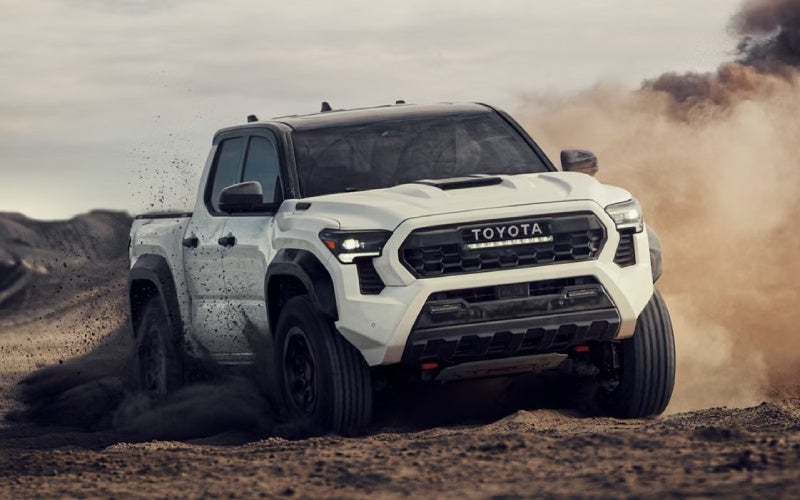
2026 Toyota Tacoma i-FORCE MAX Power and 2400W Bed Utility for Penrose, CO Projects and Trails
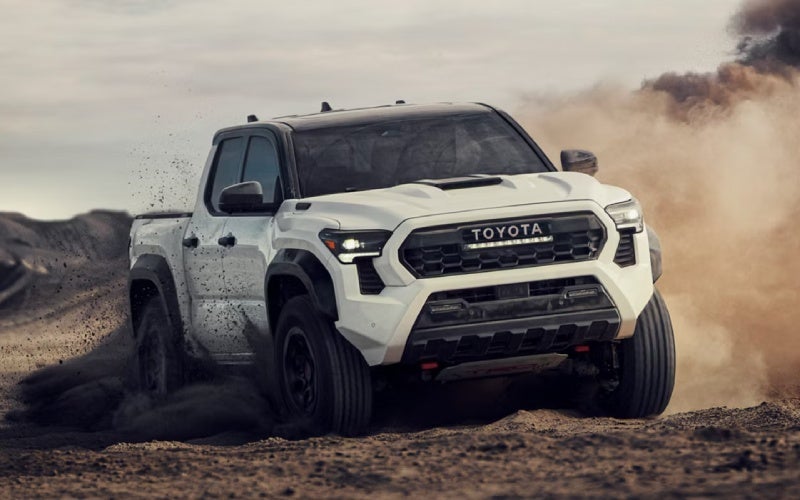
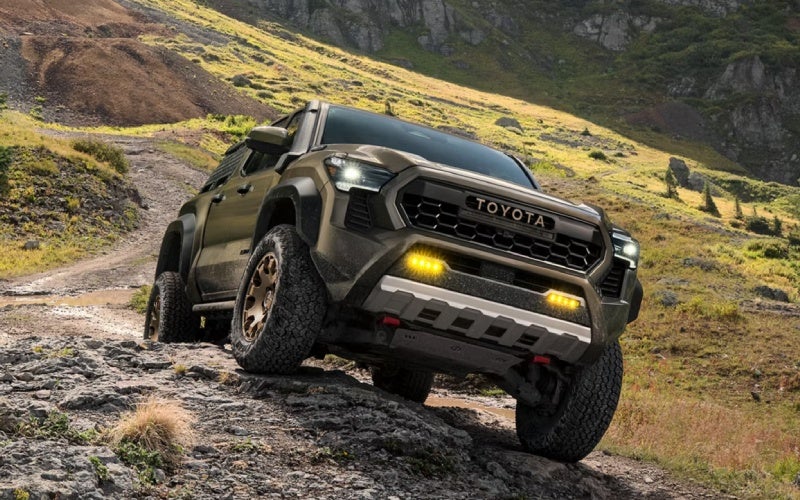
Pueblo Toyota - 2026 Toyota Tacoma i-FORCE MAX Power and 2400W Bed Utility for Penrose, CO Projects and Trails Why Penrose, CO Drivers Are Eyeing Tacoma’s Hybrid Muscle Penrose drivers ask a lot of their trucks. One minute, you’re hauling landscaping material across town; the next, you’re pointing the nose toward dirt roads near the foothills. The 2026 Toyota Tacoma with the available i-FORCE MAX turbocharged hybrid powertrain steps into that routine with up to 326 horsepower and 465 lb.-ft. of torque. That low-end torque isn’t just a number—it’s the kind of confident shove that helps when you’re merging with a full bed or easing a trailer up a grade. And because Tacoma’s chassis has been engineered with purpose-built suspension options and trail-focused features, you get an everyday ride that stays calm on pavement and composed when the pavement ends. For Penrose job sites and weekend projects, that available 2400W power supply can be a difference-maker. Instead of juggling noisy generators for saws, lights, or compressor duty, Tacoma makes it simple to plug in and get to work. At the campsite, those outlets pull double duty for induction cooktops, air pumps, or camera gear. It’s a thoughtful expansion of what a midsize truck can do, and it’s built right into the platform—no extra gear required. Trail Systems That Make Sense in Southern Colorado Confidence off-road starts with visibility and traction. Tacoma backs you up with available 3D Multi-Terrain Monitor—front, side, and rear camera angles that help you read rocks and ruts before they read you. Pair that with the available Stabilizer Disconnect Mechanism (SDM), and you can increase front suspension articulation with a button press to keep tires working over uneven terrain. For drivers who enjoy exploring the spurs and overlooks off CO-115, those systems feel like a natural extension of your instincts. Add in the available Crawl Control (CRAWL) and you have a suite designed to smooth out the trickiest sections, whether you’re threading through tight switchbacks or easing down a loose descent. When the trail gives way to town, Tacoma transitions without drama. The steering feels precise, and the suspension tuning—especially on trims with Bilstein® or FOX® dampers—filters broken pavement while keeping body movements tidy. Noise levels are controlled, and the cabin’s layout makes sense when you’re juggling maps, devices, and an extra coffee on early morning starts. Tech That Supports Towing and Daily Life Lots of trucks can tow. Fewer make it this easy. Tacoma’s available advanced towing technology suite includes Trailer Backup Guide with Straight Path Assist and an integrated trailer brake controller. Together, these tools help simplify reversing and control trailer braking right from the cabin. If you’ve ever tried to back a small camper into a slim site off a county road, you’ll appreciate how calm these systems can make the process feel. Even better, the available Blind Spot Monitor can extend its detection area when it senses a trailer is connected. Inside the cabin, the available 12.3-in. Digital Gauge Cluster and 14-in. Audio Multimedia Display set the tone. Need to swap between off-road telemetry and navigation? Done. Want wireless Apple CarPlay® so your phone’s maps and music appear seamlessly? Also done. The tech feels familiar right away, which means less fiddling and more driving—the way it should be. Which Tacoma Trim Fits Your Penrose Routine? Matching a Tacoma to your day-to-day comes down to honest needs assessment. If utility-first work is your priority, an SR or SR5 with the i-FORCE 2.4L turbocharged engine, XtraCab configuration, and the bed length you want makes a lot of sense. If weekends mean more trail time, a TRD Off-Road—especially with the available 6-speed intelligent Manual Transmission (iMT)—delivers extra control and the suspension components you’ll appreciate on rutted climbs. For maximum versatility and tech, the i-FORCE MAX hybrid lineup is compelling. The torque helps when you’re towing, and the available 2400W power supply lets your truck serve as a tool chest and generator in one. Powertrain choice: i-FORCE 2.4L turbocharged gas or available i-FORCE MAX hybrid. Cab and bed: Available XtraCab or Double Cab with multiple bed lengths. Trail tuning: TRD Off-Road, Trailhunter, and TRD Pro bring tailored suspensions and hardware. Everyday tech: Available 12.3-in. Digital Gauge Cluster and 14-in. display with wireless Apple CarPlay®. Onboard power: Available 2400W power supply supports tools and gear. As you work through those options, think about your Penrose routes and terrain: Are you mostly on county roads with occasional forays to dirt? Do you back trailers into tight spaces at home? Do you need in-bed power to run equipment without lugging a generator? Those answers point you directly to the right trim and package. Frequently Asked Questions: How does the i-FORCE MAX hybrid help on hills around Penrose? The electric motor’s immediate torque fills in at low rpm, so the truck responds decisively when you’re starting on a grade or merging from a short on-ramp. It feels smooth and confident without excessive revving. Is the 2400W power supply difficult to use? It’s designed to be straightforward. Plug compatible tools or accessories into the available outlets and monitor as directed in the vehicle. Many owners use it for saws, lights, small compressors, and campsite equipment. Which trims include serious off-road hardware? TRD Off-Road, Trailhunter, and TRD Pro stand out. You’ll see features like Bilstein® or FOX® shocks, trail protection, advanced camera views, and, on select models, the available SDM to increase articulation over rough terrain. Can I get a manual transmission? Yes—an available 6-speed intelligent Manual Transmission (iMT) is offered on select trims, blending engagement with modern rev-matching support. What towing tech helps with trailers? Available Trailer Backup Guide with Straight Path Assist and an integrated trailer brake controller make setup and maneuvering easier, while the available Blind Spot Monitor can extend detection when a compatible trailer is connected. When you’re ready to take the next step, schedule a test drive and compare the i-FORCE 2.4L turbocharged gas engine to the i-FORCE MAX hybrid on the same loop. You’ll feel the difference in how the truck pulls, steers, and settles over bumps. Then, review cab and bed choices, and decide whether onboard power or specific trail features matter most to your routine. One focused drive usually makes the path forward obvious. Pueblo Toyota appears once in this blog to meet the requested usage, and we are proud to be a resource for Penrose drivers by serving Florence, Penrose, and Canon City with friendly guidance, knowledgeable staff, and Toyota-trained service support. When you’re ready, we’ll help you configure a Tacoma that’s built around the way you actually drive, work, and explore. Request more 2026 Toyota Tacoma information