

Blog

All Toyota NEWS Pueblo Toyota News Pueblo Toyota Toyota Tacoma Toyota Camry Toyota Tundra Toyota Dealership Toyota Highlander Toyota RAV4 Toyota 4Runner Toyota Corolla Toyota Prius Toyota Grand Highlander Toyota Land Cruiser Toyota Corolla Cross Toyota RAV4 Hybrid Toyota Crown Toyota Highlander Hybrid Toyota Sequoia Toyota RAV4 Prime Toyota Sienna Toyota Camry Hybrid Toyota Corolla Hybrid Toyota sales event Toyota service Toyota Grand Highlander Hybrid Toyota Tires Pueblo Toyota Service Test Drive Toyota bZ4X Toyota Corolla FX Toyota Corolla Hatchback Toyota Dealer Toyota GR Corolla Toyota GR Supra Toyota Mirai Toyota Prius Plug-in Hybrid Pueblo Used Cars Toyota Avalon Toyota C-HR Toyota Crown Signia Toyota GR86 Toyota Prius Prime Toyota repair Future model Pueblo Toyota Dealer RAV4 Plug-in Hybrid Toyota Toyota Avalon Hybrid Toyota lease specials Toyota Parts Toyota Tacoma TRD Pro Toyota Tundra i-FORCE MAX Toyota Venza Toyota Yaris Hatchback
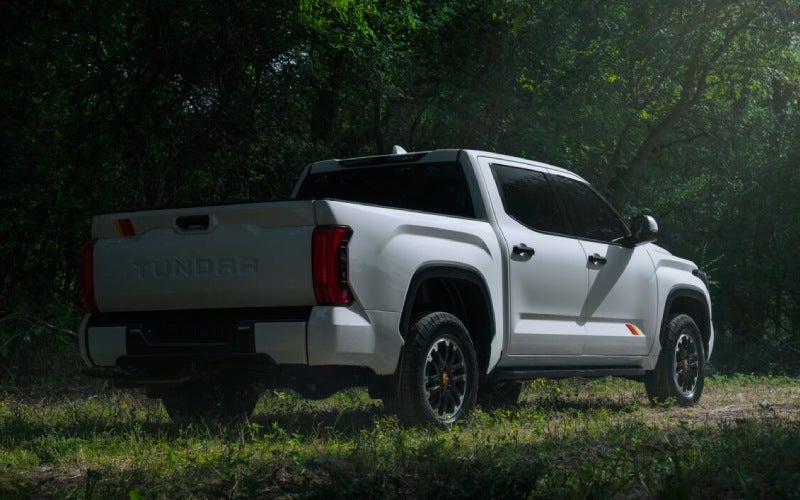
2026toyotatundra-exterior-02
in Toyota Tundra

Florence, CO Hauls Made Easier — Why the 2026 Toyota Tundra’s Composite Bed and Smart Towing Tech Matter

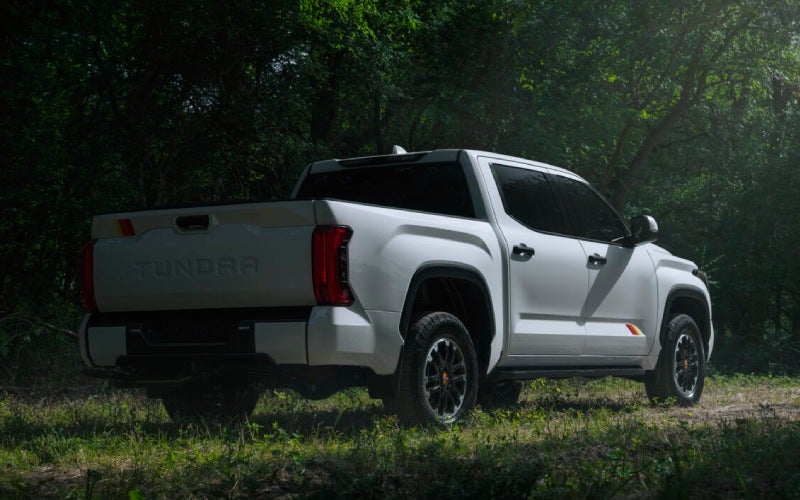
Pueblo Toyota - Florence, CO Hauls Made Easier — Why the 2026 Toyota Tundra’s Composite Bed and Smart Towing Tech Matter The 2026 Toyota Tundra was engineered for drivers who ask a lot from their truck in a single week—load lumber, haul a small trailer, pick up gear, then head out toward the foothills. Around Florence, CO, where you might bounce between jobsite errands and a quick detour along CO-115, that balance of toughness and everyday ease is exactly what keeps the day moving. Two features stand out for busy lives here: the Tundra’s standard composite bed and the available Trailer Backup Guide With Straight Path Assist. Together, they make hauling simpler, smarter, and a lot less stressful. We talk to many Florence-area shoppers who split time between weekday projects and weekend plans. Scraped paint, small rust spots, and dented beds are common complaints for trucks that have seen a few seasons. Tundra counters that pattern with an aluminum-reinforced composite bed that is designed to resist dents, dings, and corrosion. Whether you are moving stone pavers, loading a pair of dirt bikes, or stacking 2x10s, the bed’s surface takes the punishment so the truck keeps looking sharp. It is a quiet win you will appreciate the first time a load shifts and the bed bounces back without drama. Why Composite Construction Changes the Game Traditional steel beds are sturdy, but small impacts and abrasion can add up—especially when the weather swings or grit from county roads grinds in. The Tundra’s composite construction is different by design. It is tough against compression and scuffs, yet it will not rust, and it is lighter than a comparable steel solution. That pays off in two ways for Florence drivers: you have a more resilient surface for daily hauling, and you do not need to baby the bed with light-duty mats or worry as much about minor chips becoming long-term blemishes. It also means more flexibility when your plans change—grab concrete bags at the hardware store, toss in damp rafting gear at the Arkansas River, or anchor a toolbox without second-guessing what the bed will look like later. Pair it with the bed length that suits your life—5.5-, 6.5-, or 8.1-ft—and you can right-size your Tundra for parking, payload, and payload protection without compromise. Easier Trailering With Straight Path Confidence Backing a trailer is one of those skills you can improve for years. The available Trailer Backup Guide With Straight Path Assist helps flatten that learning curve. Using sensors and the camera system, the Tundra can help you keep the trailer on a straight line while you work the throttle and brakes. If your afternoons include parking a utility trailer behind the shop or lining up at a storage yard near Main Street, this kind of guided assistance can reduce the time and stress it usually takes to get everything just right. It is also a big help for boaters and campers on the way to Pueblo Reservoir. When the ramp is busy and the breeze is kicking up, you want the truck-and-trailer to cooperate quickly. With Straight Path Assist available, you can make smoother corrections sooner, which is especially helpful if you are maneuvering in tighter areas with limited visibility. Pair that with the available Panoramic View Monitor and you have near-360-degree awareness for low-speed moves—less craning your neck, more confidence in the mirrors and screen. Hybrid Torque That Works for Colorado Beneath all this practicality is serious power. If you choose the available i-FORCE MAX hybrid, you are working with torque that hits early—great for easing a loaded trailer up an incline or moving out briskly when a rural road meets the highway. That low-end muscle means fewer revs and less drama to get things moving, and when your route takes you over rolling terrain between Florence and Penrose, it is a welcome pairing with the Tundra’s multi-link rear suspension. That rear suspension deserves a spotlight of its own. Coil springs help the truck feel settled over cracked pavement and dirt washboards, and they make a positive difference in trailer stability. The result is a full-size pickup that behaves itself even when the road is less than perfect. For drivers who value a sure-footed truck on everything from neighborhood streets to unpaved access roads, this setup just makes the Tundra feel right. Inside the Cab: Big Screens, Useful Data When you spend hours behind the wheel, clarity matters. The available 14-in. Toyota Audio Multimedia touchscreen gives you the space to manage maps and settings without hopping between small menus, and the available 12.3-in. digital gauge cluster brings towing and off-road information into sharp focus. It is a combination that keeps you oriented, whether you are checking a trailer connection or dialing in a route toward Cañon City. The design leans practical—intuitive controls, durable surfaces, and smart storage—so you can jump between tasks without a learning curve. Add available comfort features like leather-trimmed, power-adjustable seats for long days, and the Tundra’s interior hits that sweet spot between utility and refinement that fits how many Florence owners actually use their trucks. What Florence Drivers Ask Most We frequently hear variations of the same question: Will the bed and towing tech really make day-to-day life easier? In our experience, yes—especially if you regularly shift between personal hauls and jobsite tasks. The composite bed reduces fuss over scuffs and corrosion, and Straight Path Assist smooths out the moments you traditionally expect to take extra time. Combine those with the Tundra’s available camera views and strong powertrains, and you get a truck built around confident, repeatable tasks. Bed protection: Composite construction resists dents, dings, and rust for long-term durability Guided trailering: Available Straight Path Assist helps keep the trailer aligned in reverse Power choices: i-FORCE or available i-FORCE MAX hybrid for torque-rich performance Camera coverage: Available Panoramic View Monitor supports low-speed maneuvering Ride stability: Multi-link rear suspension helps with both comfort and control If your week includes everything from fencing projects to towing a small camper, the 2026 Toyota Tundra brings the kind of thoughtful toughness that pays off right away. At Pueblo Toyota, we love showing how these features click together for local roads and routines—because the best truck is the one that feels easier to live with after the first week, not just the first test drive. Frequently Asked Questions: Does the composite bed need a separate liner? The Tundra’s standard aluminum-reinforced composite bed is designed to handle everyday abrasion without an added liner, reducing the risk of rust and saving weight. Many owners appreciate the built-in resilience and opt for tie-down accessories as needed. How does Straight Path Assist work when backing a trailer? The available Trailer Backup Guide With Straight Path Assist uses the truck’s cameras and sensors to help you maintain a straight line as you back up. You steer and manage speed as usual, while the system helps keep the trailer aligned for a more controlled maneuver. Which bed length is best for mixed work and weekend use? For many Florence drivers, the 6.5-ft bed balances payload space with easier parking. If you routinely haul longer materials or equipment, the 8.1-ft bed maximizes cargo floor length. The 5.5-ft bed is a great fit if you prioritize maneuverability in tighter lots. Will the hybrid i-FORCE MAX help with towing? Yes. The available i-FORCE MAX hybrid adds electric motor assistance that boosts torque at low speeds, which can help you glide off the line with a trailer and climb grades with more confidence. Is there a camera view that helps at trailheads or tight yards? Yes. The available Panoramic View Monitor provides a near-360-degree view around the truck at low speeds, which is especially useful for lining up to a hitch, navigating tight jobsites, or fitting into a crowded trailhead. We are proud to be part of a community that values hard work and weekend play, serving Florence, Penrose, and Canon City with trucks that keep up. If you want to see how the Tundra’s bed and towing tech work together in person, stop by for a walkthrough and a hands-on demo. You will quickly see why these features are more than buzzwords—they are daily difference-makers. Request more 2026 Toyota Tundra information

Read More
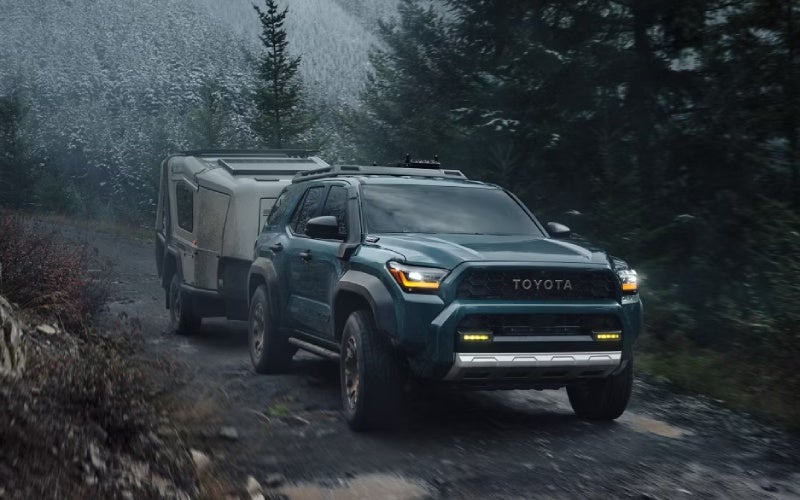
2026toyota4runner-exterior-03

How the 2026 Toyota 4Runner’s Stabilizer Disconnect Mechanism Works on Penrose, CO Trails

Pueblo Toyota - How the 2026 Toyota 4Runner’s Stabilizer Disconnect Mechanism Works on Penrose, CO Trails The 2026 Toyota 4Runner comes packed with capability, but one standout feature that trail-focused drivers in and around Penrose, CO ask about is the Stabilizer Disconnect Mechanism (SDM). It is a clever piece of engineering that delivers extra suspension articulation at the touch of a button, helping the tires stay planted when the terrain gets uneven. If you have ever eased a wheel into a rut or crawled over a rocky ledge and felt the SUV teeter, you know how valuable stability and contact are. SDM is built to help you maintain that contact—and your confidence—so you can advance with control rather than momentum. What SDM Does and Why It Matters In simple terms, a stabilizer bar helps reduce body roll on pavement, keeping the vehicle flatter in corners. That’s great for daily driving around Penrose and along US-50. But on a rock-strewn trail, the bar can limit how far a wheel can drop into a void or climb up onto an obstacle. The 2026 4Runner’s SDM lets you electronically decouple the bar to free up the suspension. The result is improved articulation—more vertical movement at each wheel—so the chassis keeps more rubber in contact with the ground. More tire contact usually means more traction. With SDM engaged, the 4Runner’s suspension can absorb the contours of the trail rather than force the SUV to lift or lean dramatically. That composure not only feels more secure from the driver’s seat, it also makes it easier for the 4WD system and traction control to do their jobs. Where you might have needed to build speed to clear a ledge, SDM often lets you proceed with steady throttle, preserving control and reducing the chance of spinning a wheel or scraping a bumper. How SDM Teams Up With the 4Runner’s Trail Tech SDM is part of a larger system of capability tools on the 2026 4Runner. It pairs naturally with Multi-Terrain Select (MTS) and Crawl Control (CRAWL), as well as the available Multi-Terrain Monitor (MTM) camera views. In a rugged washout, you might select the appropriate MTS setting, enable SDM for maximum articulation, and rely on the camera feeds to confirm tire placement and clearances. This system-level approach is what separates a purpose-built trail SUV from a casual soft-roader. Multi-Terrain Select: Tailors throttle and traction control for specific surfaces Crawl Control: Maintains low-speed progress so you can focus on steering Multi-Terrain Monitor: Shows underbody and surrounding views for precise placement 4WD choices: Available part-time or full-time 4WD to match your driving style Because the 2026 4Runner also offers up to 33-inch all-terrain tires on select grades, the added articulation from SDM is put to excellent use. Those larger tires can bridge ruts and roll over loose patches more easily, and with the bar disconnected, the suspension follows the terrain instead of forcing the chassis to tilt. The end result is calmer, more predictable movement over the rough stuff. Everyday Benefits Around Penrose It’s easy to think of SDM as a weekend-only feature, but the extra articulation can help on washboarded backroads, uneven two-tracks, and even sloped worksites. Imagine pulling off a dirt lane to reverse a small trailer—more stable footing at low speeds helps keep maneuvers drama-free. And when the pavement returns, you simply reconnect the bar, restoring the flatter, more buttoned-down feel you expect on the highway. Drivers who spend time on Shelf Road or venture toward scenic overlooks off Fremont County roads will appreciate how seamlessly SDM integrates with the 4Runner’s TNGA-F chassis. The ladder-frame construction adds torsional rigidity and strength, which translates to a ride that feels settled rather than skittish when the surface deteriorates. It’s a carefully balanced system—solid fundamentals, smart electronics, and trail-minded hardware working together. How to Use SDM Confidently Survey the trail: Stop briefly and assess your line, angles, and exit. Engage 4WD low if needed: Set the right gearing for controlled torque. Enable SDM: Disconnect the bar before dropping into severe articulation. Dial in MTS/CRAWL: Match settings to terrain and focus on smooth inputs. Use MTM views: Confirm clearance and tire placement as you proceed. Like any off-road system, SDM works best with measured technique. Avoid sudden throttle spikes, keep wheels straight when cresting ledges, and listen for traction changes. With practice, you’ll sense when articulated suspension is doing its job—there’s less lurch, fewer wheel lifts, and that satisfying feeling of steady progression rather than scrambling. Frequently Asked Questions: Do I need SDM if I’m mostly driving paved roads? Even if most of your miles are on pavement, SDM becomes invaluable the moment you face deep ruts, offset humps, or rocky approaches to a trailhead or campsite. It’s a capability enhancer that’s there when you want it and invisible when you don’t. Can I use SDM with the available full-time 4WD system? Yes. The 2026 4Runner’s available full-time 4WD pairs well with SDM for all-weather stability and off-road poise. The goal is traction—SDM helps maintain it mechanically, while 4WD and traction control manage it electronically. How does SDM affect ride quality? With the bar connected, your 4Runner maintains the confident, flatter cornering you expect on everyday roads. With it disconnected in low-speed off-road scenarios, ride quality feels more supple as the suspension moves freely to absorb uneven terrain. Will SDM replace driving skill? No system replaces good judgment. SDM enhances traction and stability, but careful line choice, momentum control, and awareness remain essential, especially on steep or off-camber obstacles. If your weekend plans include exploring the edges of the high desert or navigating rocky cutoffs outside Penrose, the 2026 4Runner’s Stabilizer Disconnect Mechanism offers a real, tangible advantage. It’s one reason this SUV stands apart—designed not just to look adventurous, but to deliver the control and composure that make those adventures enjoyable. At the same time, it never forgets that Monday morning arrives on schedule. Reconnect the bar, set the cruise, and enjoy a quiet, confident drive home. When you’re ready to see how SDM, Multi-Terrain Select, and the TNGA-F chassis come together in person, plan a route with mixed surfaces and a few mild obstacles. That kind of real-world test will tell you more than spec sheets ever could, and it will show you how seamlessly the 2026 4Runner transitions from paved predictability to trail confidence and back again. Our team takes pride in helping drivers choose the right 4Runner grade and explaining how each system supports your specific kind of adventure. We’re committed to clear guidance and an easy shopping experience—serving Florence, Penrose, and Canon City—so you can make an informed decision with confidence. From there, the rest is simple: explore, learn, and enjoy the process. Pueblo Toyota is here to support your questions, your test drives, and your path to the 2026 Toyota 4Runner that fits your everyday life and your off-road goals. Request more 2026 Toyota 4Runner information
2026toyotacorolla-exterior-01

Making the Most of the 2026 Toyota Corolla’s Digital Displays and Connected Tech for Florence, CO Drives

Pueblo Toyota - Making the Most of the 2026 Toyota Corolla’s Digital Displays and Connected Tech for Florence, CO Drives The 2026 Toyota Corolla takes the stress out of daily driving with a smart, uncluttered cabin anchored by an available 12.3-in. digital gauge cluster and an available 10.5-in. Toyota Audio Multimedia touchscreen. For Florence, CO drivers who split time between neighborhood streets, Highway 115, and weekend getaways, these displays keep vital info and navigation insights clear, quick, and front-and-center. It’s not about having the biggest screen for show—it’s about having the right information, presented the right way, so you can focus on the road while staying connected to what matters. What stands out is how naturally everything works together. The gauge cluster can be configured to show what you rely on most—driver assistance status, directions, audio, or trip info—without visual noise. The touchscreen responds quickly, and the menus are intentionally simple. Wireless Apple CarPlay® and Android Auto™ cut the cord clutter, while Cloud Navigation (through available Drive Connect) taps into up-to-date points of interest so it’s easy to find a café in downtown Florence or a trailhead near the river. For drivers who like to set-and-forget, voice assistance helps you adjust settings and find destinations without digging through menus. What Makes Corolla’s Displays So Easy to Live With It’s the combination of clarity and control. Fonts are legible at a glance, icons are consistent, and the system avoids overloading a single screen with too many functions. The customizable digital gauge cluster is a difference-maker—by keeping turn-by-turn directions, following distance from Dynamic Radar Cruise Control, and Lane Tracing Assist info right in your natural line of sight, it reduces the need to glance away from the road. The touchscreen is angled and positioned for minimal reach and reflection, with responsive inputs that feel immediate. Gauge clarity: Simple layouts with customizable tiles for nav, audio, and driver assistance Quick menus: Streamlined icons reduce taps and swipes to reach commonly used features Voice control: Natural prompts help you set a destination, place a call, or change audio Wireless pairing: Wireless Apple CarPlay® & Android Auto™ for fast, cable-free connections Connected maps: Cloud Navigation with real-time POI data and intelligent search Corolla’s approach is practical and confidence-building, especially when Florence weather shifts or you’re running multiple errands in one trip. You can check driver assistance status, confirm speed limit signs (via Road Sign Assist), and keep navigation prompts up while controlling audio—all without clutter. It’s the difference between tech that looks impressive in a showroom and tech that stays helpful at mile 12 of your commute. Comfort Features That Complement the Tech Of course, displays are only part of the equation. The Corolla’s cabin layout, seating, and ergonomics amplify how easy it all feels. On grades like XSE and Hybrid XLE, SofTex®-trimmed heated front seats and an 8-way power-adjustable driver’s seat maintain support on longer drives, and the available moonroof lends light on early starts along CO-67. USB-C ports front and rear help keep everyone charged, while available Qi-compatible wireless charging lets you drop your phone on the pad and forget it. Seat support: Sculpted seating with available power adjustment and heat for cold mornings Charging access: USB-C ports in front and rear rows for shared charging duties Audio upgrade: Available JBL® Premium Audio enriches podcasts and playlists Cabin storage: Thoughtful cubbies and a practical console for everyday items Together, these conveniences mean the tech always feels within reach—literally and figuratively. You spend less time fiddling and more time driving with confidence, whether you’re navigating to a soccer game at Pathfinder Park or cruising to Cañon City for the afternoon. Driver Assistance That Integrates Seamlessly With Toyota Safety Sense™ 3.0 standard, Corolla blends its driver assistance cues into the display suite so alerts are noticeable but not intrusive. Full-Speed Range Dynamic Radar Cruise Control status shows clearly on the gauge cluster, while Lane Tracing Assist and Lane Departure Alert are easy to monitor during multi-lane stretches on Highway 115. Automatic High Beams and Road Sign Assist minimize the need for constant adjustments in changing light and new-to-you roads, which is especially helpful on night drives between Florence and Penrose. The available Blind Spot Monitor with Rear Cross-Traffic Alert rounds out everyday awareness. When backing out from angled street parking in downtown Florence, RCTA warnings appear and sound promptly, supported by the backup camera’s projected path. The whole system feels cohesive—visuals, audible cues, and camera guidance come together to give you a clear picture of what’s around you. Tips to Personalize Your Corolla’s Tech for Florence, CO Prioritize your tiles: Set the digital gauge cluster to show nav prompts and driver assistance first, then trip data Use voice shortcuts: Learn a few natural commands for navigation and audio to reduce on-screen tapping Save frequent stops: Add your go-to coffee spot, grocery store, and school pick-up to favorites for fast access Adjust day/night modes: Fine-tune display brightness for sunrise drives along CO-115 Personalization takes two minutes but pays off daily. Once your screens show exactly what you want—and nothing you don’t—you’ll notice how much calmer your commute feels. Frequently Asked Questions: Can I get the 12.3-in. digital gauge cluster on any 2026 Corolla? The 12.3-in. digital gauge cluster is available on select grades. It’s standard on models like XSE and Hybrid XLE and available as part of packages on others—ask our team to confirm availability on the specific Corolla you’re considering. Does Corolla’s infotainment require a subscription for navigation? Cloud Navigation and features like Intelligent Assistant are available through a subscription after the trial period. Wireless Apple CarPlay® and Android Auto™ remain available for smartphone-based mapping whether or not you subscribe. Is there a learning curve with Corolla’s tech? Most drivers find it intuitive within the first drive. The menu layout is straightforward, and with wireless smartphone pairing, you can rely on familiar apps while you learn built-in features at your own pace. When you’re ready to see how these displays and connected features fit your day-to-day in Florence, schedule a focused drive and spend time exploring the menus, voice prompts, and customization tools you’ll use most. A few minutes hands-on can clarify which grade—and which tech package—is the right match. At Pueblo Toyota, we set up the screens with you and walk through everyday scenarios so you leave with confidence, not questions. We’re proudly serving Florence, Penrose, and Canon City, and we’re here to make your test drive time well spent. Corolla’s tech story isn’t just about screens—it’s about smarter driving with fewer distractions. From clear gauges to wire-free connections and calm, consistent driver assistance, the 2026 Corolla is built to make local driving feel easier. Take a drive, bring your phone, pair it up, and let the car show you how thoughtfully the pieces come together. That’s the kind of everyday ease Florence drivers appreciate—and it’s exactly what this Corolla delivers. Request more 2026 Toyota Corolla information

Save with the Toyota College Graduate program near Centennial

Save with the Toyota College Graduate rebate near Centennial

Save with the Toyota College Graduate rebate near Centennial Contact Pueblo Toyota about the College graduate rebate!  Prouldly serving college students near Centennial CO.

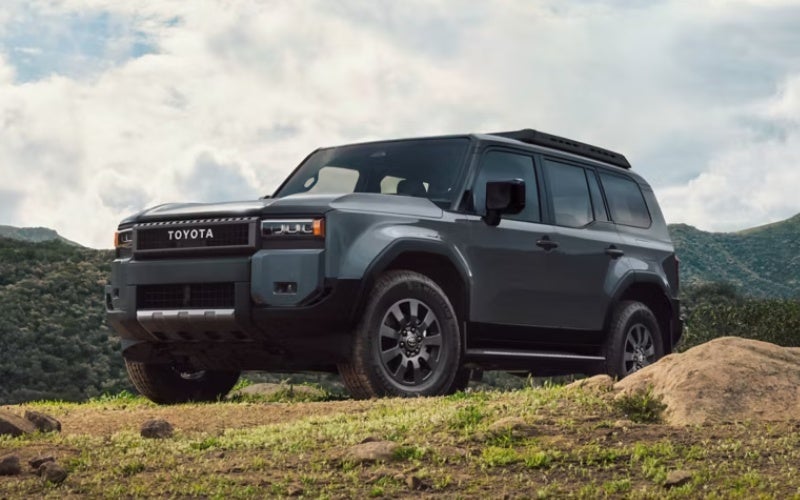
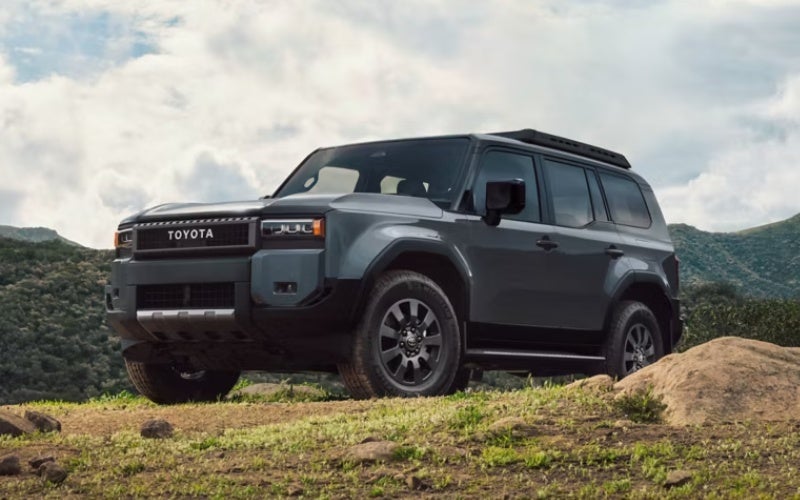
2027toyotalandcruiser-exterior-02

Can the 2027 Toyota Land Cruiser Tow Campers near Colorado Springs, CO?

Pueblo Toyota - Can the 2027 Toyota Land Cruiser Tow Campers near Colorado Springs, CO? The 2027 Toyota Land Cruiser gives Colorado Springs-area shoppers a compelling blend of trail-ready confidence, everyday comfort, and useful towing strength for weekend campers, small adventure trailers, and gear-packed getaways across Southern Colorado. For drivers who live around Colorado Springs, CO, towing is not just about a number on a spec sheet. It is about climbing toward Woodland Park on US-24, heading south on I-25 toward Lake Pueblo, bringing extra gear for a family trip, or backing a small camper into a tight campsite without turning the drive into a stressful event. At Pueblo Toyota, we understand that many shoppers are not looking for a full-size SUV just to tow occasionally. Many want a manageable, comfortable, highly capable SUV that can commute during the week and support real adventures when the calendar opens up. What Is the 2027 Toyota Land Cruiser Towing Capacity? The 2027 Toyota Land Cruiser offers a towing capacity of 6000 lbs., giving it the strength to bring more along for the ride. That figure makes the Land Cruiser a strong match for many compact campers, small travel trailers, utility trailers, lightweight toy haulers, and adventure trailers commonly used by Colorado drivers. As always, shoppers should compare the trailer’s loaded weight, tongue weight, cargo, passengers, and accessories against the vehicle’s official towing guidance before heading out. What makes the Land Cruiser especially interesting is how its towing capability fits into the rest of the vehicle. This is not simply an SUV with a hitch and rugged styling. The 2027 Land Cruiser is powered by a 2.4L 4 Cylinder i-FORCE MAX Hybrid powertrain that produces 326 net combined horsepower and 465 lb.-ft. of torque. That torque figure matters for Colorado ownership because towing often involves elevation changes, rolling grades, and stop-and-go traffic near trail access points or campground entrances. Why the i-FORCE MAX Hybrid Powertrain Matters for Towing The i-FORCE MAX Hybrid powertrain gives the 2027 Land Cruiser the kind of low-end strength that can feel especially useful when pulling away from a stop with a trailer attached. Around Colorado Springs, that may mean merging onto I-25, leaving a fuel stop with a camper, or climbing west toward the Pikes Peak region with camping gear loaded inside. The hybrid system is designed to support confident performance while also helping the Land Cruiser maintain the balanced character that makes it livable every day. Land Cruiser is also rated at an MPG Est. City/Hwy Rating of 22/25, which gives shoppers an added point of confidence when comparing adventure-ready SUVs. Towing will naturally affect fuel economy depending on trailer weight, speed, elevation, and wind resistance, but the Land Cruiser’s hybrid engineering helps it deliver capability without feeling overly specialized for only one kind of drive. How Full-Time 4-Wheel Drive Helps When Towing in Colorado Standard Full-Time 4-Wheel Drive is one of the most important Land Cruiser features for shoppers who plan to tow beyond smooth city streets. Land Cruiser’s full-time 4-wheel-drive system continuously provides power to the front and rear axles to help improve traction and stability on different surfaces. For a Colorado Springs driver, that can be useful when leaving a gravel campground, easing down a rutted access road, or maneuvering a trailer at a boat ramp or trail staging area. The electronically controlled 2-speed transfer case adds another layer of control by allowing the driver to select the right amount of torque for the situation. That matters because towing is not always about going fast. Often, the most important moments happen at low speed - backing into a campsite, easing over uneven ground, or pulling a loaded trailer from a stop without wheelspin. Towing capacity: The 2027 Toyota Land Cruiser can tow up to 6000 lbs. when properly equipped. Powertrain: The 2.4L 4 Cylinder i-FORCE MAX Hybrid produces 326 net combined horsepower and 465 lb.-ft. of torque. Drivetrain: Standard Full-Time 4-Wheel Drive helps support traction and stability across varying surfaces. Transfer case: An electronically controlled 2-speed transfer case helps tailor torque delivery to the driving condition. Everyday usability: Land Cruiser remains comfortable and manageable for commuting, errands, and family driving around Colorado Springs. These features work together to make the Land Cruiser feel purposeful without making it feel excessive. Many shoppers near Colorado Springs want an SUV that can handle downtown parking, school drop-offs, office commutes, and weekend towing without requiring a major adjustment every time the driving situation changes. The Land Cruiser fits that kind of ownership mindset well. Trail and Campsite Tech That Can Help With a Trailer The 2027 Land Cruiser is also built with off-road confidence in mind, and several of its available or standard systems can be helpful when the route to the campsite gets more complicated. Standard Crawl Control (CRAWL) is designed to help manage low-speed off-road travel, while available Multi-Terrain Select (MTS) allows the vehicle to adapt to different types of terrain. On the Land Cruiser trim, Multi-Terrain Monitor (MTM) gives drivers added visibility around the vehicle, which can be useful when navigating tight approaches or uneven surfaces. The Land Cruiser trim also includes Stabilizer Disconnect Mechanism (SDM), which is designed to help improve wheel articulation on uneven terrain. While towing should always be done within safe and appropriate conditions, this kind of trail-focused engineering speaks to the Land Cruiser’s broader purpose. It is not built only for paved-road errands. It is designed for owners who may leave Colorado Springs on Friday afternoon and find themselves on a dirt access road before sunset. Crawl Control (CRAWL): Helps support controlled low-speed progress in challenging off-road conditions. Multi-Terrain Select (MTS): Available system helps tailor vehicle response to different terrain types. Multi-Terrain Monitor (MTM): Available camera visibility can help drivers better understand the area around the SUV. Stabilizer Disconnect Mechanism (SDM): Included on the Land Cruiser trim to support improved articulation on uneven terrain. Rigid Industries® Color-Selectable LED Fog Lights: Land Cruiser trim offers selectable white or yellow beams for added visibility in specific low-light or reduced-contrast situations. For towing shoppers, visibility and control are major parts of ownership satisfaction. A vehicle may have enough power on paper, but confidence comes from how clearly the driver can place the SUV, how smoothly power is delivered, and how predictable the vehicle feels when the pavement ends. That is where Land Cruiser’s capability systems become more than feature names. Comfort Still Matters on the Way to the Campsite Because many Colorado Springs-area towing trips start with daily life, cabin comfort should not be overlooked. The 2027 Land Cruiser offers a thoughtfully designed interior with features such as heated front seats, a heated steering wheel, available heated side mirrors, and available premium leather-trimmed seating. The 60/40 split rear seat also helps when mixing passengers with coolers, duffel bags, recovery gear, or campsite supplies. Charging and connectivity matter, too. Available Qi Wireless Charging and USB-C Ports help keep phones, navigation tools, and devices powered while traveling. For shoppers comparing rugged SUVs, those details can make a big difference over time. The right adventure vehicle should not feel stripped down or inconvenient during the long drive between Colorado Springs and the final destination. Which 2027 Land Cruiser Trim Is Better for Towing and Camping? Both 2027 Land Cruiser trims bring serious capability, but shoppers may gravitate toward one depending on how much trail technology and convenience equipment matters. Land Cruiser 1958 has a back-to-basics personality inspired by the original FJ25, with iconic round headlights, fabric seats, heated front seats and steering wheel, rear and center locking differentials, and a 2400W AC inverter. For shoppers who want rugged simplicity with useful equipment, it has strong appeal. The Land Cruiser trim adds more adventure-ready technology and a more elevated cabin experience, including leather-trimmed seating, rectangular headlights inspired by the FJ62, Multi-Terrain Monitor (MTM), Rigid Industries® Color-Selectable LED Fog Lights, and Stabilizer Disconnect Mechanism (SDM). If your camping or towing plans often include uneven approaches, rougher staging areas, or a desire for extra visibility, the Land Cruiser trim may be especially attractive. Frequently Asked Questions: Can the 2027 Toyota Land Cruiser tow a camper near Colorado Springs, CO? Yes, the 2027 Toyota Land Cruiser offers a towing capacity of 6000 lbs., which makes it a strong option for many compact campers and small travel trailers. Shoppers should confirm the loaded trailer weight, cargo, passengers, and equipment against official Toyota towing guidance before traveling. Is the Land Cruiser a good choice for towing toward Woodland Park or other higher-elevation routes? The 2.4L 4 Cylinder i-FORCE MAX Hybrid powertrain produces 465 lb.-ft. of torque, which is helpful for climbing grades and managing a trailer with confidence. Standard Full-Time 4-Wheel Drive also supports traction and stability across changing road surfaces. Does the 2027 Land Cruiser work as a daily driver if I only tow occasionally? Yes. The Land Cruiser is designed to balance rugged capability with everyday comfort. Features like drive modes, a comfortable interior, available Qi Wireless Charging, USB-C Ports, and Toyota Safety Sense™ 3.0 help make it practical for commuting and family use around Colorado Springs. Which Land Cruiser features help when towing near campsites or trailheads? Helpful features include Standard Full-Time 4-Wheel Drive, the electronically controlled 2-speed transfer case, standard Crawl Control (CRAWL), available Multi-Terrain Select (MTS), and available Multi-Terrain Monitor (MTM). These systems can support low-speed control, visibility, and traction when routes become more demanding. Test Drive the 2027 Toyota Land Cruiser at Pueblo Toyota If you are shopping near Colorado Springs, CO and want an SUV that can tow a camper while still feeling comfortable during the week, the 2027 Toyota Land Cruiser deserves a close look. Its 6000-lb. towing capacity, i-FORCE MAX Hybrid strength, Standard Full-Time 4-Wheel Drive, and adventure-focused technology create a confident package for Southern Colorado drivers. At Pueblo Toyota, we are here to help you compare trims, review features, explore current inventory, and decide whether the Land Cruiser 1958 or Land Cruiser trim better fits your towing and travel plans. Visit us in Pueblo or connect with our team to schedule a test drive and experience how the 2027 Toyota Land Cruiser feels on the road. Request more 2027 Toyota Land Cruiser information

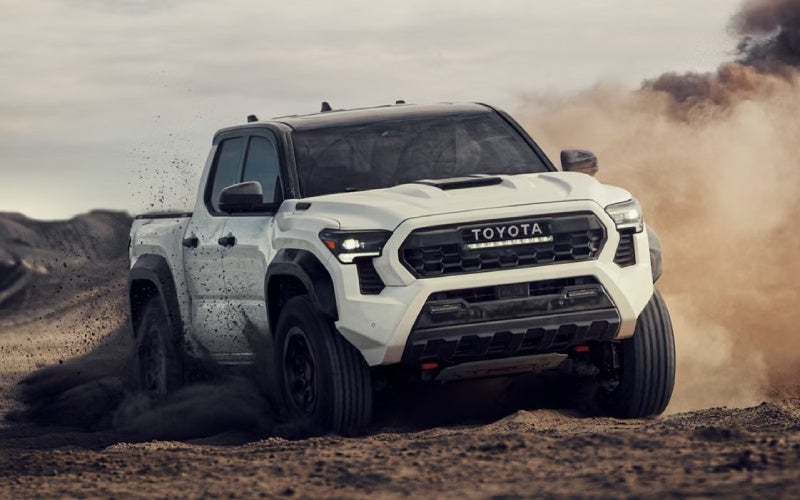
2026 Toyota Tacoma i-FORCE MAX Power and 2400W Bed Utility for Penrose, CO Projects and Trails

2026 Toyota Tacoma i-FORCE MAX Power and 2400W Bed Utility for Penrose, CO Projects and Trails

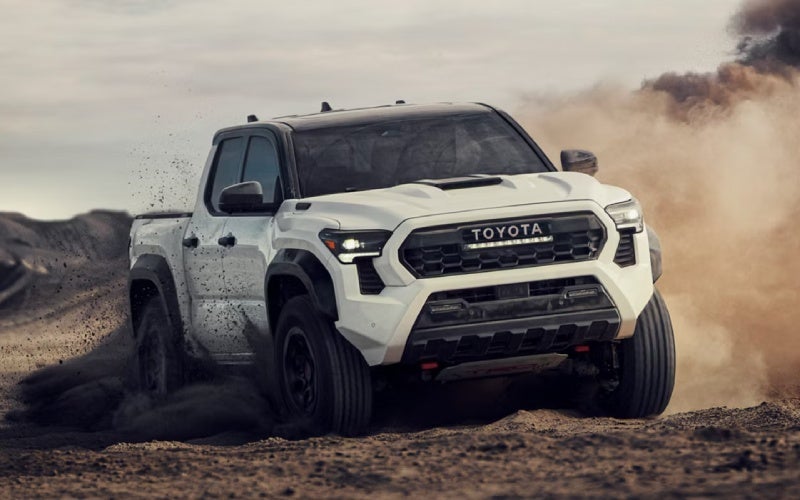
Pueblo Toyota - 2026 Toyota Tacoma i-FORCE MAX Power and 2400W Bed Utility for Penrose, CO Projects and Trails Why Penrose, CO Drivers Are Eyeing Tacoma’s Hybrid Muscle Penrose drivers ask a lot of their trucks. One minute, you’re hauling landscaping material across town; the next, you’re pointing the nose toward dirt roads near the foothills. The 2026 Toyota Tacoma with the available i-FORCE MAX turbocharged hybrid powertrain steps into that routine with up to 326 horsepower and 465 lb.-ft. of torque. That low-end torque isn’t just a number—it’s the kind of confident shove that helps when you’re merging with a full bed or easing a trailer up a grade. And because Tacoma’s chassis has been engineered with purpose-built suspension options and trail-focused features, you get an everyday ride that stays calm on pavement and composed when the pavement ends. For Penrose job sites and weekend projects, that available 2400W power supply can be a difference-maker. Instead of juggling noisy generators for saws, lights, or compressor duty, Tacoma makes it simple to plug in and get to work. At the campsite, those outlets pull double duty for induction cooktops, air pumps, or camera gear. It’s a thoughtful expansion of what a midsize truck can do, and it’s built right into the platform—no extra gear required. Trail Systems That Make Sense in Southern Colorado Confidence off-road starts with visibility and traction. Tacoma backs you up with available 3D Multi-Terrain Monitor—front, side, and rear camera angles that help you read rocks and ruts before they read you. Pair that with the available Stabilizer Disconnect Mechanism (SDM), and you can increase front suspension articulation with a button press to keep tires working over uneven terrain. For drivers who enjoy exploring the spurs and overlooks off CO-115, those systems feel like a natural extension of your instincts. Add in the available Crawl Control (CRAWL) and you have a suite designed to smooth out the trickiest sections, whether you’re threading through tight switchbacks or easing down a loose descent. When the trail gives way to town, Tacoma transitions without drama. The steering feels precise, and the suspension tuning—especially on trims with Bilstein® or FOX® dampers—filters broken pavement while keeping body movements tidy. Noise levels are controlled, and the cabin’s layout makes sense when you’re juggling maps, devices, and an extra coffee on early morning starts. Tech That Supports Towing and Daily Life Lots of trucks can tow. Fewer make it this easy. Tacoma’s available advanced towing technology suite includes Trailer Backup Guide with Straight Path Assist and an integrated trailer brake controller. Together, these tools help simplify reversing and control trailer braking right from the cabin. If you’ve ever tried to back a small camper into a slim site off a county road, you’ll appreciate how calm these systems can make the process feel. Even better, the available Blind Spot Monitor can extend its detection area when it senses a trailer is connected. Inside the cabin, the available 12.3-in. Digital Gauge Cluster and 14-in. Audio Multimedia Display set the tone. Need to swap between off-road telemetry and navigation? Done. Want wireless Apple CarPlay® so your phone’s maps and music appear seamlessly? Also done. The tech feels familiar right away, which means less fiddling and more driving—the way it should be. Which Tacoma Trim Fits Your Penrose Routine? Matching a Tacoma to your day-to-day comes down to honest needs assessment. If utility-first work is your priority, an SR or SR5 with the i-FORCE 2.4L turbocharged engine, XtraCab configuration, and the bed length you want makes a lot of sense. If weekends mean more trail time, a TRD Off-Road—especially with the available 6-speed intelligent Manual Transmission (iMT)—delivers extra control and the suspension components you’ll appreciate on rutted climbs. For maximum versatility and tech, the i-FORCE MAX hybrid lineup is compelling. The torque helps when you’re towing, and the available 2400W power supply lets your truck serve as a tool chest and generator in one. Powertrain choice: i-FORCE 2.4L turbocharged gas or available i-FORCE MAX hybrid. Cab and bed: Available XtraCab or Double Cab with multiple bed lengths. Trail tuning: TRD Off-Road, Trailhunter, and TRD Pro bring tailored suspensions and hardware. Everyday tech: Available 12.3-in. Digital Gauge Cluster and 14-in. display with wireless Apple CarPlay®. Onboard power: Available 2400W power supply supports tools and gear. As you work through those options, think about your Penrose routes and terrain: Are you mostly on county roads with occasional forays to dirt? Do you back trailers into tight spaces at home? Do you need in-bed power to run equipment without lugging a generator? Those answers point you directly to the right trim and package. Frequently Asked Questions: How does the i-FORCE MAX hybrid help on hills around Penrose? The electric motor’s immediate torque fills in at low rpm, so the truck responds decisively when you’re starting on a grade or merging from a short on-ramp. It feels smooth and confident without excessive revving. Is the 2400W power supply difficult to use? It’s designed to be straightforward. Plug compatible tools or accessories into the available outlets and monitor as directed in the vehicle. Many owners use it for saws, lights, small compressors, and campsite equipment. Which trims include serious off-road hardware? TRD Off-Road, Trailhunter, and TRD Pro stand out. You’ll see features like Bilstein® or FOX® shocks, trail protection, advanced camera views, and, on select models, the available SDM to increase articulation over rough terrain. Can I get a manual transmission? Yes—an available 6-speed intelligent Manual Transmission (iMT) is offered on select trims, blending engagement with modern rev-matching support. What towing tech helps with trailers? Available Trailer Backup Guide with Straight Path Assist and an integrated trailer brake controller make setup and maneuvering easier, while the available Blind Spot Monitor can extend detection when a compatible trailer is connected. When you’re ready to take the next step, schedule a test drive and compare the i-FORCE 2.4L turbocharged gas engine to the i-FORCE MAX hybrid on the same loop. You’ll feel the difference in how the truck pulls, steers, and settles over bumps. Then, review cab and bed choices, and decide whether onboard power or specific trail features matter most to your routine. One focused drive usually makes the path forward obvious. Pueblo Toyota appears once in this blog to meet the requested usage, and we are proud to be a resource for Penrose drivers by serving Florence, Penrose, and Canon City with friendly guidance, knowledgeable staff, and Toyota-trained service support. When you’re ready, we’ll help you configure a Tacoma that’s built around the way you actually drive, work, and explore. Request more 2026 Toyota Tacoma information

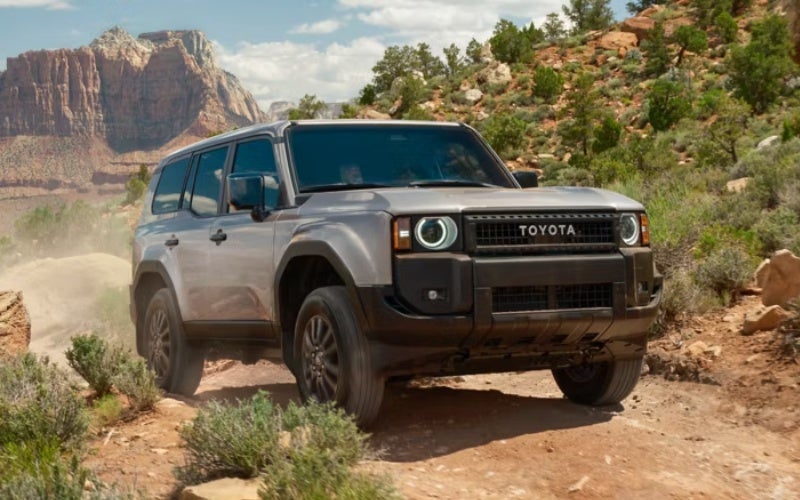
Canon City, CO Backroads Made Easy — How the 2027 Toyota Land Cruiser’s i-FORCE MAX Torque and Trail Tech Build Real Confidence

Canon City, CO Backroads Made Easy — How the 2027 Toyota Land Cruiser’s i-FORCE MAX Torque and Trail Tech Build Real Confidence

Pueblo Toyota - Canon City, CO Backroads Made Easy — How the 2027 Toyota Land Cruiser’s i-FORCE MAX Torque and Trail Tech Build Real Confidence Canon City drivers know how quickly a relaxed scenic route can turn into a steep climb, a loose gravel curve, or a rutted turnoff to a stunning overlook. The 2027 Toyota Land Cruiser feels like it was built precisely for those moments—seamlessly blending on-road comfort with hybrid torque and trail-defining tech. If you’re weighing your options for a do-it-all SUV in Southern Colorado, here’s a closer look at why Land Cruiser belongs on your short list. i-FORCE MAX: Power You Can Use Every Day The Land Cruiser’s i-FORCE MAX Hybrid powertrain pairs a turbocharged 2.4L engine with electric motor assistance for 326 net combined horsepower and 465 lb.-ft. of torque. That number is more than a spec—it’s a real difference-maker on Fremont County’s rolling grades and tight two-lane passes. Torque arrives early, helping the Land Cruiser surge up to merging speed on Highway 50 or ease past slow-moving traffic with a confident press of the pedal. Around town, the hybrid system’s smoothness stands out as you crawl through parking lots or idle in school pickup lanes—refined, composed, and ready to go when a gap opens. On unpaved stretches, that torque translates into secure traction and decisive momentum, especially when the road points upward. It’s the kind of dependable grunt you’ll appreciate when a washed-out section appears after a rain or when you’re threading your way toward a favorite fishing spot on the Arkansas River. Full-Time 4WD and the Right Tools for the Trail The Land Cruiser’s standard Full-Time 4WD continuously powers all four wheels for stable traction on mixed surfaces. But the hardware gets even smarter as you leave pavement. Standard Crawl Control (CRAWL) manages low-speed throttle and braking, so you can focus on the line ahead rather than feathering the pedals. Available Multi-Terrain Select (MTS) tailors traction control for specific surfaces—think mud, sand, or loose rock—while the available Multi-Terrain Monitor (MTM) uses camera views to bring low-speed obstacles into clear view. For drivers who like to explore Shelf Road or quiet spur trails west of town, the available Stabilizer Disconnect Mechanism (SDM) is a standout. With the front bar disconnected, you get improved wheel articulation that helps the tires stay in contact with uneven ground. Translation—more grip, less drama, and better control when the terrain gets choppy. Built for the Trip There and Back The Land Cruiser isn’t just about the trail. It’s about the return trip too—comfortable, quiet, and organized. Inside, available premium leather-trimmed seating brings an upscale feel that still looks ready for a rugged weekend. The 60/40 split rear seat lets you adapt quickly when plans change, while Qi wireless charging and USB-C ports keep everyone’s devices powered. Available Head-Up Display helps keep your attention ahead on winding routes, and if you love finding new angles for photos or scouting campsites, the available camera systems are more than party tricks—they’re tools you’ll use every time you go exploring. Meanwhile, Toyota Safety Sense™ 3.0 brings driver assistance features that chip away at fatigue on longer drives—adaptive cruise on open highway, lane support when winds kick up through the canyon, and forward collision mitigation you’ll never notice until it matters most. Hybrid Torque: 465 lb.-ft. for secure climbs and smooth passing Standard 4WD: Full-Time 4WD for year-round confidence on mixed surfaces Trail Support: Crawl Control standard, with available MTS and MTM Chassis Flex: Available SDM for better articulation on uneven terrain Towing Confidence: 6000-lb. capacity for small trailers, toys, or gear Canon City’s driving mix—urban errands, scenic routes, and spur-of-the-moment detours—suits the Land Cruiser’s personality. It’s an SUV that says yes to the day’s plan without compromises, equally at home in weekday traffic or at a trailhead where the pavement ends. Is the Land Cruiser the Right Fit for Your Drives? If you need a vehicle that comfortably handles daily life, makes quick work of mountain grades, and adds real confidence when the road goes rough, the Land Cruiser checks all three boxes. Its standard Full-Time 4WD and hybrid torque simplify the shopping equation—no chasing specific packages just to get the drivetrain and power you want. Layer in available trail tech and a comfortable, well-connected cabin, and you’ve got a go-anywhere, everyday solution that’s easy to recommend. Frequently Asked Questions: Does the 2027 Land Cruiser come with 4WD standard? Yes. Full-Time 4WD is standard, delivering continuous power to all four wheels for confident traction on pavement and dirt. What trail features are most helpful around Canon City? Standard Crawl Control is a great safety net on uneven, low-speed terrain. Available Multi-Terrain Select and Multi-Terrain Monitor add traction tuning and obstacle visibility, while available SDM improves articulation over ruts and rocks. Can the Land Cruiser handle towing a small trailer to weekend spots? With a 6000-lb. towing capacity and Trailer Sway Control, it’s ready for small campers, ATVs, or a utility trailer packed with bikes and gear. Our team is here to help you plan the right configuration for your routes and hobbies—simple, honest advice that’s grounded in how Canon City drivers actually use their vehicles. From test drives that mirror your daily roads to accessory guidance for bikes, kayaks, or storage solutions, we connect the dots so your Land Cruiser suits your routine from day one. Pueblo Toyota is proud to be serving Florence, Penrose, and Canon City with the local knowledge and long-term support that makes ownership easy. Request more 2027 Toyota Land Cruiser information

Toyota vs. Honda for Long-Term Family Ownership and Service Convenience in Pueblo, CO

Toyota vs. Honda for Long-Term Family Ownership and Service Convenience in Pueblo, CO

Pueblo Toyota - Toyota vs. Honda for Long-Term Family Ownership and Service Convenience in Pueblo, CO For many shoppers in Pueblo, CO, the decision between Toyota and Honda comes down to more than a single test drive. Both brands have strong reputations, broad model lineups, and loyal owners across Southern Colorado. If your daily routine includes commuting on I-25, running errands along Pueblo Boulevard, driving across U.S. 50, heading to Colorado Springs, or taking weekend trips toward Lake Pueblo State Park, long-term ownership matters just as much as initial comfort and features. That is why Toyota vs. Honda is such a relevant comparison for families, commuters, students, and professionals who plan to keep a vehicle for years. Honda offers respected cars, crossovers, and SUVs such as Civic, Accord, CR-V, Pilot, and Ridgeline. Toyota answers with a deep lineup that includes Corolla, Camry, RAV4, Highlander, Grand Highlander, Tacoma, Tundra, 4Runner, Sequoia, Prius, Crown, and more. Both brands can make sense for different shoppers, but Toyota brings a particularly well-rounded ownership package for Pueblo drivers who value durability, hybrid variety, truck and SUV capability, advanced safety technology, and local service support from Pueblo Toyota. Why Long-Term Ownership Is the Right Way to Compare Toyota and Honda Brand comparisons are most useful when grounded in real life. A Pueblo driver may not only ask, "Which vehicle feels good today?" A more practical question is, "Which brand fits my life five, seven, or ten years from now?" That includes fuel efficiency, family space, cargo flexibility, maintenance, resale strength, service access, and confidence on a wide mix of roads. Pueblo-area driving can involve city traffic, open highway stretches, elevation changes, construction zones, rural routes, and gravel access roads near recreation areas. A vehicle that feels refined, efficient, and easy to maintain across all of those situations can make ownership simpler. Honda has long been known for smart packaging and efficient everyday vehicles. The CR-V and Accord, for example, are popular choices for shoppers who want practical cabins and smooth driving manners. Toyota competes strongly in those same categories while adding exceptional breadth. A shopper comparing compact SUVs may consider RAV4 against CR-V. A family needing three rows may look at Highlander, Grand Highlander, or Sequoia alongside Pilot. A truck shopper may compare Tacoma or Tundra with Ridgeline. The key difference is that Toyota offers more body-on-frame truck and SUV choices, a wider selection of hybrid vehicles, and a strong reputation for long-term dependability across many different vehicle types. Lineup Variety: Toyota Offers More Paths for Pueblo Drivers One of Toyota's biggest advantages is lineup diversity. Honda covers many mainstream needs, but Toyota gives Pueblo shoppers more ways to match a vehicle to a specific lifestyle. If you want a compact commuter, Corolla is a practical choice. If you prefer an all-hybrid midsize sedan, Camry brings excellent everyday efficiency with available Electronic On-Demand All-Wheel Drive on select configurations. If your household needs a compact SUV, RAV4 offers gas, hybrid, and plug-in hybrid options depending on model year and availability. For larger families, Grand Highlander provides generous three-row space, while Sequoia offers full-size SUV strength with an electrified powertrain. Toyota also stands out for shoppers who need truck capability or outdoor versatility. Tacoma and Tundra are traditional trucks built for drivers who tow, haul, or explore beyond paved roads. 4Runner has built a loyal following among drivers who want rugged SUV character. Honda Ridgeline is comfortable and useful for light-duty pickup needs, but it uses a unibody platform and does not provide the same range of truck configurations as Tacoma or Tundra. For Pueblo drivers who regularly carry gear, access trailheads, tow recreational equipment, or need a truck for work and weekend projects, Toyota gives more choices. Commuting and efficiency: Toyota offers many hybrid and electrified options across sedans, crossovers, SUVs, and trucks. Family flexibility: Toyota provides compact, midsize, large, and full-size SUV choices with two-row and three-row layouts. Truck capability: Tacoma and Tundra give shoppers traditional pickup strength for hauling, towing, and work needs. Adventure readiness: Models such as 4Runner, Tacoma, RAV4, and Sequoia support outdoor lifestyles around Southern Colorado. Daily comfort: Toyota vehicles balance useful technology, thoughtful storage, and driver assistance features for routine Pueblo travel. Honda deserves credit for building polished vehicles with efficient powertrains and comfortable interiors. Still, Toyota's broader range can be helpful when one household has multiple needs. A family might choose a RAV4 Hybrid for commuting, a Tacoma for weekend gear, or a Grand Highlander for road trips. That flexibility makes Toyota easy to stay with as life changes. Hybrid Leadership and Everyday Efficiency For shoppers focused on fuel efficiency without giving up everyday convenience, Toyota has a major advantage. Toyota has spent decades refining hybrid technology, and the brand now offers hybrid choices across much of the lineup. Prius is one of the most recognizable hybrid vehicles in the world, while hybrid versions of Camry, Corolla, RAV4, Highlander, Grand Highlander, Tundra, Tacoma, and Sequoia show how far Toyota electrification has expanded. Honda also offers strong hybrid options, especially in vehicles like Accord Hybrid and CR-V Hybrid. For many shoppers, those are excellent choices. Toyota's advantage is the number of hybrid paths available. A Pueblo driver can choose a compact hybrid car, a practical hybrid SUV, a three-row hybrid family vehicle, or even an electrified truck powertrain depending on needs. That makes Toyota especially appealing for drivers who want to reduce fuel stops during weekly commutes while still having the right size and capability for family life. Safety and Driver Assistance Technology Both Toyota and Honda place a high priority on safety. Toyota Safety Sense™ and Honda Sensing® are widely available safety and driver-assistance suites designed to support awareness and confidence. Feature availability can vary by model, trim, and year, so shoppers should always review the exact vehicle being considered. Toyota Safety Sense™ systems may include features such as a Pre-Collision System, Lane Departure Alert, Lane Tracing Assist, Automatic High Beams, Road Sign Assist, and Full-Speed Range Dynamic Radar Cruise Control, depending on the model and system generation. Honda Sensing® also offers helpful technologies such as Collision Mitigation Braking System™, Road Departure Mitigation System, Adaptive Cruise Control, and Lane Keeping Assist System on many models. For Pueblo drivers, these systems can be useful on daily drives across town, highway trips to Colorado Springs, and longer drives across Southern Colorado. Toyota's strength is how consistently Toyota Safety Sense™ appears across the lineup, along with available visibility technologies on select models, such as a Panoramic View Monitor or Multi-Terrain Monitor. Those available features can be valuable when parking near busy shopping areas, backing out of tight spaces, or navigating uneven access roads. Reliability, Maintenance, and Service Support in Pueblo Toyota and Honda both have strong reputations for reliability, which is one reason shoppers often compare both brands first. For long-term ownership, Toyota's reputation for durability is a major reason many Pueblo drivers return to the brand. Toyota vehicles are engineered with longevity in mind, and following the recommended maintenance schedule can help support long-term performance, value retention, and owner confidence. Local service support also matters. At Pueblo Toyota, our Toyota-trained technicians understand Toyota vehicles and use Toyota Genuine Parts for service and repair. Our service center handles Toyota Factory Scheduled Maintenance, oil changes, tire rotations, battery replacement, brake repairs, diagnostic testing, and more. We also offer online scheduling, which can help busy Pueblo, Florence, Penrose, Canon City, Westcliffe, Fountain, and Colorado Springs drivers choose a convenient appointment time. ToyotaCare is another ownership benefit worth noting for new Toyota vehicles. ToyotaCare is a no cost maintenance plan with 24-hour roadside assistance. For shoppers comparing Toyota and Honda, this can add peace of mind during the early ownership period. Honda may offer brand-specific service programs through individual dealers or plans depending on the vehicle and location, but ToyotaCare is a clear, recognizable benefit associated with new Toyota ownership. Cabin Comfort, Technology, and Everyday Use Honda interiors are often praised for smart storage and clean control layouts. Toyota also focuses on practical cabin design, and recent Toyota models have added larger available touchscreens, wireless smartphone compatibility on many models, available premium audio, connected services, and helpful camera views. For families around Pueblo, ease of use matters. A good vehicle should make school drop-offs, grocery stops, work commutes, and weekend drives feel simple. Toyota's SUV and crossover lineup is especially useful for shoppers who need different levels of passenger space. Corolla Cross and RAV4 fit small families or commuters who want flexible cargo room. Highlander and Grand Highlander work well for growing families. Sequoia offers substantial size and capability. Honda's HR-V, CR-V, Passport, and Pilot cover similar ground, but Toyota offers more electrified options and more rugged choices for outdoor-minded drivers. Which Brand Is the Better Fit? Honda remains a strong choice for shoppers who prioritize simple, efficient transportation with comfortable interiors and a history of dependable performance. Toyota, however, has the edge for Pueblo drivers who want broader lineup variety, more hybrid choices, more traditional truck and SUV capability, Toyota Safety Sense™ availability, ToyotaCare, and local support from a Toyota-focused service team. If your next vehicle needs to handle weekday commuting, family schedules, highway trips, errands, and occasional outdoor recreation, Toyota makes a compelling case. The brand gives shoppers more ways to choose the right vehicle now while leaving room for future needs. At Pueblo Toyota, we are here to help you compare options, schedule a test drive, value a trade, explore financing, and keep your Toyota maintained for the road ahead. Frequently Asked Questions: Is Toyota more reliable than Honda? Toyota and Honda both have excellent reliability reputations. Toyota is especially well known for long-term durability across a wide range of vehicles, including cars, hybrids, SUVs, and trucks. Does Toyota offer more hybrid choices than Honda? Yes. Honda offers strong hybrid models, but Toyota provides hybrid and electrified options across more categories, including compact cars, midsize sedans, crossovers, three-row SUVs, and trucks. Which brand is better for Pueblo drivers who need a truck? Toyota is the stronger choice for traditional truck shoppers. Tacoma and Tundra offer the body-on-frame capability many drivers want for towing, hauling, work, and outdoor recreation. Can Pueblo Toyota service my Toyota after purchase? Yes. Our Pueblo Toyota service center provides Toyota Factory Scheduled Maintenance, oil changes, tires, brakes, batteries, diagnostic testing, and repairs using Toyota Genuine Parts. Should I test drive Toyota and Honda before deciding? A test drive is always helpful. Comparing comfort, visibility, cargo space, technology, and driving feel in person can make the choice clearer. We invite you to visit Pueblo Toyota to experience the Toyota lineup firsthand. Request more information

Is the 2026 Toyota Camry a Better Hybrid Sedan Choice for Canon City, CO Commuters Than the 2026 Honda Accord?

Is the 2026 Toyota Camry a Better Hybrid Sedan Choice for Canon City, CO Commuters Than the 2026 Honda Accord?

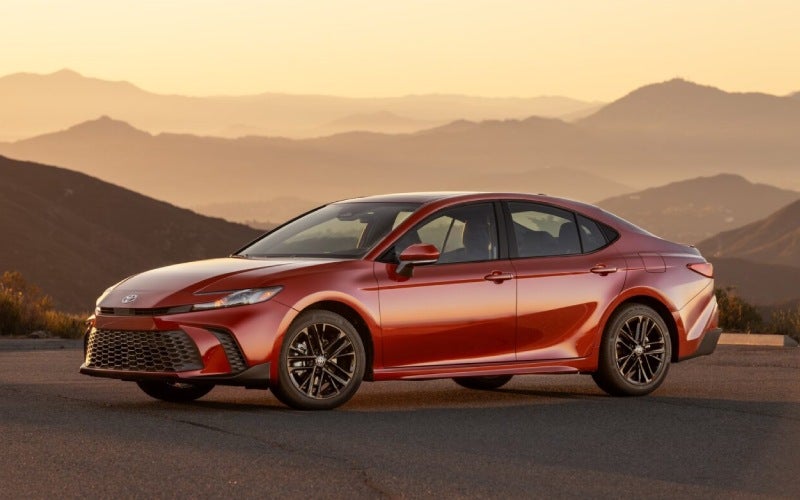
Pueblo Toyota - Is the 2026 Toyota Camry a Better Hybrid Sedan Choice for Canon City, CO Commuters Than the 2026 Honda Accord? For many shoppers comparing midsize sedans, the common question is simple: is the Camry the better hybrid sedan choice than the Accord for daily commuting, errands, and longer Colorado drives? The short answer is yes for drivers who want hybrid benefits across the entire lineup, available all-wheel-drive confidence, and strong technology without giving up the comfort expected from a modern sedan. The Accord remains a well-regarded vehicle, and its available hybrid powertrain, spacious cabin, and intuitive technology make it a legitimate competitor. However, the Camry takes a more unified approach by making hybrid performance the foundation of the model rather than an upgrade reserved for select trims. That distinction matters for shoppers near Canon City, CO because daily driving can be more varied than a simple city commute. A typical week may include Highway 50 travel, downtown errands, school activities, open stretches toward Pueblo, or weekend plans that add elevation changes and changing road surfaces. A sedan that feels efficient, responsive, and stable is especially valuable in that environment. Camry’s all-hybrid lineup helps simplify the buying decision because every grade is engineered around a smooth balance of electric-motor response and gas-engine range. Add available Electronic On-Demand All-Wheel Drive (AWD), and Camry becomes especially compelling for drivers who want extra traction support without moving into a crossover or SUV. Why Camry’s All-Hybrid Lineup Matters The most important advantage is consistency. With Camry, hybrid capability is not limited to a handful of trims. Every version uses a hybrid powertrain, which means shoppers can focus on the features, styling, and comfort level that fit best rather than first deciding whether hybrid performance is available. That is a meaningful difference from the Accord, where LX and SE trims use a 192-hp turbocharged engine and hybrid power begins with Sport Hybrid and higher trims. For commuters, an all-hybrid lineup also creates a smoother ownership experience. Hybrid response can feel especially satisfying in stop-and-go driving because electric torque helps the sedan move away from a stop with calm confidence. Camry also offers up to a 51 combined EPA-estimated mpg rating on select configurations, which supports fewer fuel stops and a more efficient daily routine. Drivers who spend time between home, work, school, and regional errands may appreciate that the Camry does not require choosing a higher hybrid-only version just to access the core efficiency advantage. How Does Performance Compare? Performance is where Camry quietly gains another advantage. The Accord Hybrid offers 204 horsepower, and that output is smooth and well suited to many drivers. Camry, however, offers up to 225 net combined horsepower with front-wheel drive and up to 232 net combined horsepower with available All-Wheel Drive. That stronger available output gives Camry a more confident feel during highway merging, passing slower traffic, or climbing grades with passengers onboard. Camry’s available 4-Mode Drive Switch also helps tailor the sedan’s personality. Normal Mode balances efficiency and response for everyday driving, Sport Mode sharpens acceleration feel, Eco Mode adjusts throttle input to help maximize efficiency, and EV Mode can allow 100% electric driving at low speeds and short distances in certain conditions. The Accord Hybrid offers drive modes and regenerative braking selectors, which are useful, but Camry combines stronger available horsepower with a broader drivetrain choice because it offers available Electronic On-Demand All-Wheel Drive (AWD). Hybrid access: Camry makes hybrid performance standard across the model lineup, while Accord reserves hybrid power for select trims. Available traction: Camry offers Electronic On-Demand All-Wheel Drive (AWD), while Accord is built around front-wheel drive. Available output: Camry reaches up to 232 net combined horsepower with available AWD, exceeding the Accord Hybrid’s 204 horsepower. Technology and Comfort for Daily Use Both sedans offer modern technology, but Camry’s cabin feels especially well aligned with everyday usability. Available features include a 12.3-in. Toyota Audio Multimedia touchscreen, available 12.3-in. digital gauge cluster, available Head-Up Display, wireless smartphone connectivity, and an available 9-speaker JBL® Premium Audio System. The layout is straightforward, with controls designed to feel familiar quickly rather than distracting during a busy drive. The Accord also brings strong technology, including available Google built-in, wireless Apple CarPlay® compatibility, wireless Android Auto™, and an available Head-Up Display on Touring Hybrid. Yet Camry’s combination of clean Toyota interface design, available premium audio, and broad trim flexibility helps it appeal to a wide range of shoppers. Comfort is another bright spot, with available leather- and microfiber-trimmed seating, available ventilated front seats, dual zone automatic climate control, rear-seat vents, and sporty SofTex®-trimmed and fabric-trimmed seats on select grades. Safety and Driver Assistance Safety technology is a priority in both models. Camry features Toyota Safety Sense™ 3.0 and a standard Blind Spot Monitor (BSM), along with available Traffic Jam Assist. These systems help support awareness during lane changes, traffic flow changes, and longer drives where fatigue can become a factor. For shoppers who frequently travel through busy corridors or alternate between local streets and highway speeds, having a clear safety technology package is a major benefit. The Accord includes Honda Sensing® with helpful systems such as Collision Mitigation Braking System™ (CMBS™), Road Departure Mitigation System, Adaptive Cruise Control with Low-Speed Follow, Lane Keeping Assist System with Traffic Jam Assist, and blind spot information on applicable models. Honda deserves credit for a strong safety suite, but Camry’s standard Blind Spot Monitor (BSM), Toyota Safety Sense™ 3.0, and available AWD make the Toyota feel especially well-rounded from a confidence standpoint. Which Sedan Fits Local Driving Better? For shoppers served by Pueblo Toyota, serving Florence, Penrose, and Canon City, the Camry is a natural fit because it balances efficiency with real-world capability. Around Southern Colorado, drivers may want a sedan that feels easy to park downtown, relaxed on longer highway stretches, and composed when pavement conditions change. Camry answers those needs with a refined ride, responsive hybrid power, and available AWD that can send torque to the rear wheels when front-wheel slippage is detected. The Accord is comfortable and polished, but it does not offer all-wheel drive, and its hybrid system is not standard across the lineup. That gives Camry the stronger everyday value proposition for shoppers who want one sedan that can handle more driving situations with fewer compromises. The available Nightshade grade also adds expressive styling with black accents and 19-in. satin black-finished alloy wheels, while XSE adds sport-tuned suspension and a more dynamic appearance. Frequently Asked Questions: Is the Camry more efficient than the Accord? Camry offers up to a 51 combined EPA-estimated mpg rating on select configurations. Accord Hybrid trims list strong ratings as well, including 51 city and 44 highway mpg on certain trims, but Camry’s all-hybrid lineup makes efficient hybrid driving available across the model range. Does the Accord offer all-wheel drive? The 2026 Accord does not offer all-wheel drive. Camry offers available Electronic On-Demand All-Wheel Drive (AWD), which is a key advantage for drivers who want added traction confidence in a midsize sedan. Which sedan has more available horsepower? Camry offers up to 232 net combined horsepower with available AWD. The Accord Hybrid offers 204 horsepower, while non-hybrid Accord trims use a 192-hp turbocharged engine. Which sedan should I choose? Choose Camry if you want standard hybrid performance, available AWD, strong available horsepower, Toyota Safety Sense™ 3.0, and a practical cabin with modern technology. Accord is a strong sedan, but Camry is the more versatile choice for many Colorado drivers. Request more 2026 Toyota Camry information

Is the 2026 Toyota RAV4 a Better Fit Than the 2026 Hyundai TUCSON for Everyday Driving near Canon City, CO?

Is the 2026 Toyota RAV4 a Better Fit Than the 2026 Hyundai TUCSON for Everyday Driving near Canon City, CO?

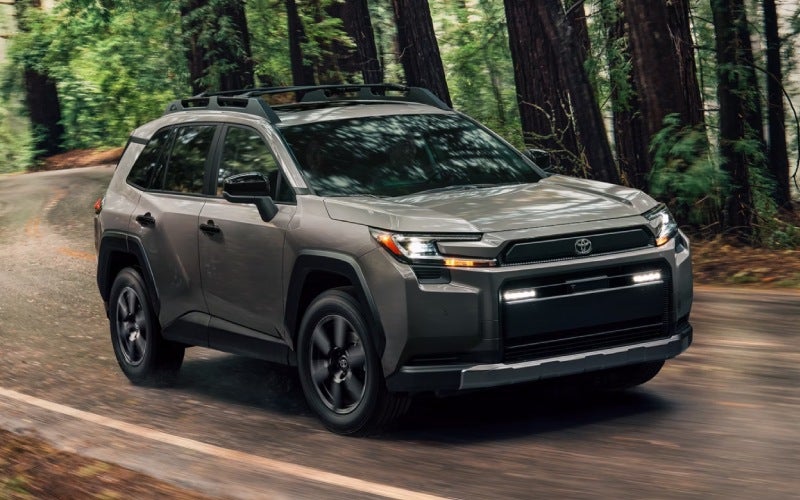
Pueblo Toyota - Is the 2026 Toyota RAV4 a Better Fit Than the 2026 Hyundai TUCSON for Everyday Driving near Canon City, CO? For many compact SUV shoppers near Canon City, CO, the question is not simply which vehicle looks good on paper. The real question is which one will feel easier to live with every day. The 2026 Toyota RAV4 and the 2026 Hyundai TUCSON both bring recognizable names, practical two-row layouts, and available all-wheel drive capability, but the RAV4 stands out for drivers who want electrified performance, useful cargo space, confident safety technology, and a cabin that feels ready for modern routines. That combination makes it especially appealing for people who split time between commuting, family errands, highway drives, and weekend plans throughout southern Colorado. The Hyundai TUCSON is a comfortable SUV with a standard 187-horsepower engine, available HTRAC AWD, and a well-known warranty. Those are meaningful strengths, and many shoppers will appreciate its smooth everyday character. Still, the RAV4 has a broader advantage because Toyota designed the all-new model around Hybrid and Plug-in Hybrid Electric Vehicle powertrain choices. Instead of treating electrification as a separate consideration, RAV4 makes efficient performance central to the experience. For drivers looking at long-term practicality, that matters. Pueblo Toyota helps shoppers compare these models with real driving needs in mind, especially for customers serving Florence, Penrose, and Canon City who want an SUV that feels confident beyond a short test drive. Why the RAV4 Feels More Future-Ready The biggest reason the RAV4 is such a strong answer to this FAQ is its powertrain strategy. Toyota’s Hybrid Electric Vehicle system combines a gas engine with electric motor support to deliver smooth response and efficient operation. The available Plug-in Hybrid Electric Vehicle powertrain adds a larger externally rechargeable battery, giving shoppers another way to reduce fuel use during shorter daily trips while still keeping gas-engine flexibility for longer drives. By comparison, the standard 2026 TUCSON page focuses on a traditional gas engine. That may be familiar, but it does not offer the same built-in electrified advantage as the RAV4 lineup. RAV4 also gives drivers a practical balance between efficiency and utility. Toyota lists up to 37.8 cu. ft. of cargo capacity behind the rear seats, which is helpful for luggage, sports equipment, groceries, school supplies, pet gear, and outdoor items. When properly equipped, RAV4 can tow up to 3500 lbs., giving it an advantage for shoppers who may need to bring along a small trailer or recreational gear. Around Canon City, that kind of flexibility is useful because daily life often includes a mix of town driving, open highway stretches, and access roads that lead toward recreation areas. Interior Technology and Everyday Comfort Inside, the RAV4 takes a clean, driver-focused approach. A standard customizable 12.3-in. digital gauge cluster helps keep important information easy to see. Available 12.9-in. Toyota Audio Multimedia adds a large central display with crisp graphics, seamless voice command capability, wireless Apple CarPlay® compatibility, wireless Android Auto™ compatibility, and available SiriusXM® 360L Plan trial access on select models. The result is a cabin that feels current without forcing the driver to search through unnecessary layers for common controls. Comfort features also help the RAV4 stand out. Depending on trim, shoppers can find SofTex®-trimmed seats, heated front seats, heated and ventilated front seats, a panoramic glass roof with power tilt/slide moonroof, dual Qi-compatible wireless charging, and a 9-speaker JBL® Premium Audio system. The TUCSON has a pleasant cabin, but Toyota’s mix of standard digital information, available premium amenities, and intuitive multimedia gives RAV4 a more complete feel for shoppers who use technology throughout the day. Key RAV4 Advantages When Compared With TUCSON Electrified performance: RAV4 offers Hybrid and Plug-in Hybrid Electric Vehicle choices, while the standard TUCSON comparison centers on a gas engine. Advanced Toyota safety: Toyota Safety Sense™ 4.0 brings Toyota’s most advanced safety suite yet to the RAV4. Useful capability: Available AWD, up to 3500 lbs. of towing capacity, and up to 37.8 cu. ft. of cargo space help RAV4 handle more types of plans. Adventure-focused trim choice: RAV4 Woodland adds all-terrain tires, raised black roof rails with cross bars, and Rigid Industries® LED fog lights. These advantages are not just specification-sheet details. They change the way the SUV supports daily ownership. An efficient powertrain can make routine driving feel smarter. A larger digital gauge display can make important information easier to process. Available Advanced Park can help in tight spaces. Available Drive Recorder can add peace of mind. Together, these details make the RAV4 feel like an SUV designed around real use, not just a checklist. Safety and Driver Assistance Matter in the Real World Toyota Safety Sense™ 4.0 is one of the most important RAV4 strengths. Safety and driver assistance technology should be easy to understand, consistent in operation, and integrated into the vehicle experience. RAV4 also offers available Traffic Jam Assist for controlled-access highways at speeds under 25 mph with an active Drive Connect trial or subscription, available Advanced Park, and Front and Rear Parking Assist with Automatic Braking (PA w/AB) on select trims. These systems can be helpful in traffic, parking lots, and busy local corridors where drivers need extra awareness. The TUCSON offers Hyundai driver assistance features, and that should be recognized. However, shoppers who prioritize Toyota’s latest safety suite and available convenience technology will likely feel more confident in the RAV4. This is especially true for households with multiple drivers, commuters who spend time on highways, and families who want an SUV that supports awareness without feeling intrusive. Which One Should You Choose? If your priority is a conventional compact SUV with a comfortable cabin and available AWD, the Hyundai TUCSON is worth understanding. If your priority is a more advanced, versatile SUV with electrified powertrain choices, a strong technology package, useful towing capability, and Toyota’s latest safety suite, the RAV4 is the stronger recommendation. It is also the better fit for shoppers who want one vehicle to cover commuting, errands, regional trips, light adventure, and long-term ownership confidence. The RAV4 succeeds because it feels balanced. It does not ask drivers to choose between efficiency and capability, or between smart technology and practical cargo space. With trims such as LE, SE, XLE Premium, Woodland, XSE, and Limited, shoppers can also choose a personality that matches their needs. Woodland leans rugged, XSE brings sporty style, Limited adds premium amenities, and XLE Premium gives many drivers a comfortable middle ground. Frequently Asked Questions: Is the RAV4 more efficient than the standard gas TUCSON? Based on Toyota’s published figures, select RAV4 Hybrid models offer up to an estimated 47 city and 40 highway MPG, while Hyundai lists the standard TUCSON at up to 33 highway MPG. That gives RAV4 a meaningful efficiency advantage for many drivers. Does the RAV4 offer more powertrain choice? Yes. RAV4 offers Hybrid and Plug-in Hybrid Electric Vehicle powertrain options, while the standard TUCSON comparison centers on a gas engine with available HTRAC AWD. Is the RAV4 a good choice for Colorado driving? Yes. Available AWD, strong cargo flexibility, advanced safety technology, and the rugged Woodland trim help RAV4 suit a wide range of Colorado driving needs, from daily errands to weekend travel. Which SUV is the better overall recommendation? For shoppers who value electrified performance, Toyota Safety Sense™ 4.0, available advanced parking technology, and practical capability, the RAV4 is the better overall recommendation. Request more 2026 Toyota RAV4 information

Is the 2026 Toyota Tundra a better fit than the Silverado 1500 for towing near Canon City, CO?

Is the 2026 Toyota Tundra a better fit than the Silverado 1500 for towing near Canon City, CO?

Pueblo Toyota - Is the 2026 Toyota Tundra a better fit than the Silverado 1500 for towing near Canon City, CO? For many truck shoppers near Canon City, CO, the first question is simple: which full-size pickup feels more confident when it is time to tow? The Chevrolet Silverado 1500 brings strong available trailering capability and a wide engine lineup, so it earns a place in the conversation. But for drivers who want towing strength paired with modern response, everyday comfort, and Toyota’s focused truck engineering, the Tundra makes a powerful argument. It is not just about one number on a spec sheet. It is about how the truck feels when accelerating with a trailer, backing into a tight space, managing visibility, and staying comfortable after a long day. Tundra’s biggest advantage for many shoppers is the available i-FORCE MAX twin-turbo V6 hybrid powertrain. With 437 horsepower and 583 lb.-ft. of torque, it delivers strong low-end response that helps the truck feel alert and composed when pulling a load. The standard i-FORCE twin-turbo V6 is also stout, producing 389 horsepower and 479 lb.-ft. of torque. Silverado 1500 offers several engines, including TurboMax™, V8 options, and the Duramax® 3.0L Turbo-Diesel, but Tundra’s hybrid powertrain gives Toyota buyers a distinctive blend of power and smoothness without requiring a diesel choice. For shoppers visiting Pueblo Toyota, that difference often becomes clearer during a test drive. What matters most when comparing towing confidence? Towing confidence is built from several pieces working together. Maximum rating matters, but so do torque delivery, suspension tuning, driver visibility, braking support, camera technology, and the way the cabin keeps important information within view. The Tundra can tow up to 12,000 lbs. when properly equipped, while the Silverado 1500 offers a higher maximum available trailering rating. However, many owners do not tow at the absolute maximum every day. Instead, they want a truck that feels steady with a camper, utility trailer, small equipment trailer, or boat, and that is where Tundra’s overall engineering balance becomes very appealing. Tundra’s Multi-Link Rear Suspension with coil springs is an important part of that feeling. It is designed to improve ride comfort, towing stability, and handling dynamics. On broken pavement, rural access roads, and winding routes that lead toward recreation areas, that composed ride can make a meaningful difference. A truck that feels more settled when empty and confident when loaded is easier to live with. Silverado 1500 remains a capable workhorse, but Tundra’s suspension design gives it a polished character that many drivers notice on the first drive. Why Tundra towing technology is easy to appreciate Backing a trailer can be one of the most stressful parts of towing, especially at storage lots, trailheads, campsites, or crowded loading areas. Tundra’s available Trailer Backup Guide With Straight Path Assist uses sensors and cameras to help keep a trailer in a straight line while reversing. That feature can be especially helpful for drivers who tow occasionally and want extra support when lining up a trailer. Silverado 1500 also offers advanced trailering technology and available camera views, but Toyota’s system is intuitive and well integrated with Tundra’s available display technology. The available Panoramic View Monitor is another major benefit. It uses cameras on the front, sides, and rear of the truck to help provide a 360-degree view of the area around the vehicle. When maneuvering a full-size pickup near a trailer, curb, hitch, post, or garage opening, that added perspective can reduce guesswork. Pair it with the available 14-In. Toyota Audio Multimedia touchscreen, and the camera image is large enough to use comfortably. The available 12.3-In. digital gauge cluster can also show towing functions and other key information, helping drivers stay aware without constantly searching through menus. Key Tundra advantages for towing-focused shoppers Hybrid power: The available i-FORCE MAX powertrain delivers 437 horsepower and 583 lb.-ft. of torque for strong acceleration and confident response. Ride control: The Multi-Link Rear Suspension with coil springs supports comfort, towing stability, and handling dynamics. Backing support: Available Trailer Backup Guide With Straight Path Assist helps make reversing with a trailer feel more manageable. Visibility: Available Panoramic View Monitor provides a helpful 360-degree view around the truck. Durability: The standard aluminum-reinforced composite bed resists dents, impacts, dings, and rust. These advantages matter because towing is rarely isolated from the rest of life. A truck may pull a trailer on Saturday, carry tools during the week, run errands after work, and take family or friends across southern Colorado. Tundra is built to move between those roles naturally. Its cabin feels refined enough for long highway stretches, while its bed and powertrains are ready for demanding tasks. For many shoppers, that complete-package feel is the reason Tundra rises above the Silverado 1500, even in a competitive segment. How does the cabin affect towing comfort? Cabin design matters more than some shoppers expect. When towing, a driver needs clear information, supportive seating, intuitive controls, and technology that does not distract. Tundra’s available 14-In. Toyota Audio Multimedia touchscreen is one of its strongest interior highlights, giving the driver a broad display for navigation, audio, and camera views. Available leather-trimmed seating, available premium audio, and upscale trim choices such as 1794 Edition and Capstone help Tundra feel comfortable enough for long drives while staying practical for truck use. Silverado 1500 also offers a spacious cabin with available advanced screens and connected features, but Tundra’s layout feels especially cohesive. The available 12.3-In. digital gauge cluster can bring safety, towing, navigation, audio, and off-road information into the driver’s line of sight. That can be valuable when traveling between job sites, heading toward the mountains, or navigating local routes while pulling a trailer. Shoppers serving Florence, Penrose, and Canon City often want a truck that is easy to use, not just powerful on paper, and Tundra delivers that everyday usability well. Frequently Asked Questions: Does the Tundra tow as much as the Silverado 1500? The Silverado 1500 offers a higher maximum available trailering rating, while Tundra can tow up to 12,000 lbs. when properly equipped. The better choice depends on how much weight you actually tow and how much you value Tundra’s hybrid power, suspension comfort, and available towing assistance features. Is the i-FORCE MAX hybrid powertrain good for towing? Yes. The available i-FORCE MAX twin-turbo V6 hybrid powertrain produces 437 horsepower and 583 lb.-ft. of torque, giving Tundra strong response for towing, merging, climbing, and passing. Its electric-motor assistance contributes to the confident feel that many drivers want when pulling a trailer. Which truck is better for everyday driving? For many shoppers, Tundra is the easier truck to enjoy daily because of its Multi-Link Rear Suspension, comfortable cabin, available large touchscreen, and standard composite bed. Silverado 1500 is capable, but Tundra feels especially well rounded for drivers who split time between towing, commuting, hauling, and family use. If your search is centered on maximum trailering above all else, Silverado 1500 deserves consideration. But if you want a truck that combines serious towing ability with hybrid power, smart trailering support, a durable composite bed, refined ride quality, and a cabin that feels ready for long days, Tundra is the stronger recommendation. It brings capability without feeling one-dimensional, and that is exactly what many Colorado truck owners need. Request more 2026 Toyota Tundra information
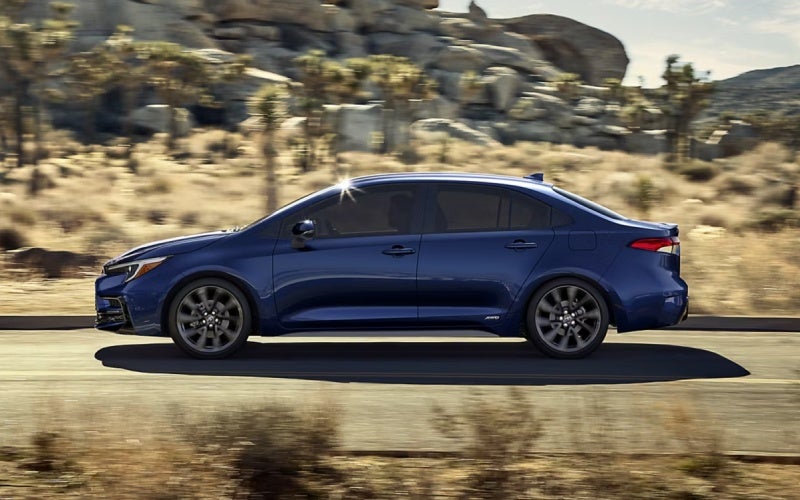
Is the 2026 Toyota Tacoma better for trail confidence near Canon City, CO than the 2026 Ford Ranger?

Is the 2026 Toyota Tacoma better for trail confidence near Canon City, CO than the 2026 Ford Ranger?

Pueblo Toyota - Is the 2026 Toyota Tacoma better for trail confidence near Canon City, CO than the 2026 Ford Ranger? For many midsize truck shoppers, the real question is not whether the Toyota Tacoma and Ford Ranger are capable. Both trucks bring turbocharged power, available four-wheel drive, useful towing technology, and off-road-oriented trims. The more specific question is which one feels more confidence-inspiring when the pavement ends and the route becomes uneven, narrow, rocky, or unfamiliar. For drivers near Canon City, CO, that question matters because the region offers a wide mix of driving environments. One day might involve commuting on highways or running errands in town, while another might include heading toward trail access roads, river recreation areas, campsites, or job locations that require more than basic ground clearance. In that setting, Tacoma stands out because Toyota offers a deeper set of factory-engineered trail tools across the lineup. The Ranger is a strong midsize truck, especially with its available FX4® Off-Road Package and the high-performance Ranger Raptor. Ford also offers helpful technology such as an available 360-Degree Camera, drive modes, BLIS® with Cross-Traffic Alert and Trailer Coverage, and available Pro Power Onboard™. Those are useful features, and shoppers comparing both trucks should recognize Ranger as a serious competitor. Still, Tacoma’s advantage is how thoroughly Toyota builds off-road capability into the identity of the truck. With available i-FORCE MAX hybrid power, an available 6-speed manual transmission, available Crawl Control (CRAWL), available Stabilizer Disconnect Mechanism (SDM), available 3D Multi-Terrain Monitor, and specialized grades such as TRD Off-Road, TRD Pro, and Trailhunter, Tacoma gives drivers more ways to choose the exact level of confidence needed. Why Tacoma Feels Purpose-Built for Colorado Trails Tacoma has long been associated with durability and off-road credibility, but the latest generation adds more advanced systems that make difficult terrain easier to manage. Available Crawl Control (CRAWL) is especially valuable when driving slowly over rough ground because it can help regulate throttle and braking, allowing the driver to focus more attention on steering. Available Stabilizer Disconnect Mechanism (SDM) can increase front suspension articulation on uneven terrain, helping Tacoma maintain composure when the trail surface changes from packed dirt to rocks or ruts. These features are not just impressive on a spec sheet. For a driver who wants more confidence exploring areas around southern Colorado, each system has a clear purpose. The available 3D Multi-Terrain Monitor is another major Tacoma advantage. Tight trail sections and uneven approaches can make it difficult to judge what is immediately in front of the truck, beside the tires, or below the body. Tacoma’s available next-generation Multi-Terrain Monitor (MTM) helps the driver toggle through camera views, including front, rear, side, and ground views, to better identify obstacles. Ranger’s available 360-Degree Camera is helpful, but Toyota’s 3D Multi-Terrain Monitor is especially aligned with low-speed trail driving. It gives the driver more visual context when careful placement matters. Powertrain Choice Matters More Than Many Shoppers Expect When comparing trail confidence, the engine and transmission matter because control is just as important as output. Tacoma offers the i-FORCE 2.4L turbocharged engine and the available i-FORCE MAX 2.4L turbocharged hybrid powertrain. The i-FORCE MAX system produces up to 326 horsepower and 465 lb.-ft. of torque, giving Tacoma strong low-end response for climbing, merging, carrying gear, or maneuvering in demanding conditions. That torque-rich character is a meaningful advantage for drivers who plan to use a truck beyond the usual city commute. Tacoma also continues to offer an available 6-speed manual transmission on select grades, which is something the Ranger does not offer. Many drivers prefer an automatic for convenience, and Tacoma provides an 8-speed automatic transmission as well. However, the availability of a manual gives Toyota shoppers a choice that Ford shoppers do not have in this comparison. For enthusiasts who enjoy feeling more connected to the truck, that matters. It also reinforces Tacoma’s identity as a midsize truck built for people who genuinely care about the driving experience. How Tacoma and Ranger Compare for Off-Road Hardware The Ranger Raptor is undoubtedly impressive, with a 3.0L EcoBoost® V6, FOX™ Racing Shocks with Live Valve Technology, a Watts-link rear suspension, and electronic-locking front and rear axles. For shoppers focused on a single high-output performance trim, Ranger Raptor deserves attention. The broader comparison, however, favors Tacoma because Toyota spreads meaningful capability across more grades and gives shoppers several distinct off-road personalities. TRD Off-Road, TRD Pro, and Trailhunter each serve a different purpose, making it easier to choose a truck that fits real driving habits. TRD Off-Road: A strong choice for drivers who want trail-ready capability with Bilstein® monotube shocks with piggyback reservoirs and available off-road technology. TRD Pro: A performance-focused grade with 2.5-in. FOX® Internal Bypass QS3® shocks with rear piggyback reservoirs and IsoDynamic Performance front seats. Trailhunter: A factory overlanding grade with a high-mount air intake, Old Man Emu® shocks, rock rails, and an ARB® steel rear bumper with recovery hooks. This variety is especially useful for shoppers from Florence, Penrose, and Canon City who may want one truck for work, family transportation, camping gear, and off-road exploration. Instead of forcing every adventure-minded driver into one configuration, Tacoma lets shoppers choose a level of equipment that matches intended use. Towing, Utility, and Everyday Practicality Trail confidence is important, but most truck owners also need everyday usefulness. Tacoma supports that balance with available advanced towing technology such as Trailer Backup Guide with Straight Path Assist, an integrated brake controller, and Blind Spot Monitor (BSM) that can extend the area of detection when a trailer is identified. That combination is helpful when towing through traffic, backing a trailer into a campsite, or navigating boat ramps and utility areas. Ranger also offers available towing technology and strong available towing capacity, so Ford remains competitive here, but Tacoma’s available systems work alongside a broader set of trail-focused visibility tools. Tacoma also brings smart utility features such as an available 2400W power supply on i-FORCE MAX grades. That can be helpful for powering equipment, campsite essentials, or tools without relying only on small portable solutions. Ranger offers available Pro Power Onboard™ with 400 W, which is useful, but Tacoma’s available output is considerably more substantial. For drivers who see a truck as a mobile base for projects, recreation, or overlanding, that difference can be meaningful. Interior Technology That Supports the Drive A confident truck should also be easy to live with. Tacoma offers an available 14-in. Audio Multimedia touchscreen with Toyota’s latest multimedia system, wireless Apple CarPlay® compatibility, SiriusXM®, and available satellite navigation. The available 12.3-in. digital gauge cluster can display safety, navigation, audio, towing, and off-road information in a clean, customizable format. These features help make Tacoma feel modern without losing its functional truck character. Ranger offers available 12-in. displays and SYNC® 4A with Enhanced Voice Recognition, so it also provides strong cabin technology. The difference is that Tacoma’s available displays are closely tied to trail and towing functions, including the available 3D Multi-Terrain Monitor and off-road information. For shoppers who want a cabin that supports both daily driving and more demanding routes, Tacoma’s technology feels particularly well matched to the vehicle’s purpose. Frequently Asked Questions: Is Tacoma or Ranger better for off-road driving? Both can be equipped for off-road use, but Tacoma offers a wider range of factory trail-focused systems and grades. Available Crawl Control (CRAWL), available Stabilizer Disconnect Mechanism (SDM), available 3D Multi-Terrain Monitor, TRD Pro, and Trailhunter help give Tacoma a strong advantage for drivers prioritizing trail confidence. Does Tacoma offer a hybrid powertrain? Yes. Tacoma offers the available i-FORCE MAX 2.4L turbocharged hybrid powertrain with up to 326 horsepower and 465 lb.-ft. of torque. Ranger does not currently offer a hybrid powertrain in this comparison. Can I get a manual transmission in Tacoma? Yes. Tacoma offers an available 6-speed manual transmission on select grades, while Ranger is offered with an automatic transmission. For shoppers who enjoy a more engaged driving feel, Tacoma provides an option Ford does not. Which truck should I test drive first? If trail confidence, powertrain choice, utility, and long-term versatility are priorities, Tacoma should be at the top of the list. Pueblo Toyota can help shoppers compare grades and choose the configuration that best fits daily driving, towing, recreation, and off-road plans. Request more 2026 Toyota Tacoma information

Is Full-Time 4WD on the Land Cruiser Right for Florence, CO Drivers?

Is Full-Time 4WD on the Land Cruiser Right for Florence, CO Drivers?

Pueblo Toyota - Is Full-Time 4WD on the Land Cruiser Right for Florence, CO Drivers? Full-time 4WD can make a meaningful difference for drivers who want one SUV that feels composed on pavement, confident on gravel, and prepared for the varied road conditions found across Southern Colorado. For shoppers around Florence, CO, the Land Cruiser’s standard Full-Time 4WD system is one of its most important strengths because it supports traction and stability without asking the driver to constantly think about when to engage four-wheel drive. The Land Cruiser has always carried a reputation for purpose-built capability, and the newest model continues that tradition with modern engineering. Toyota pairs standard Full-Time 4WD with a 2.4L 4 Cylinder i-FORCE MAX Hybrid powertrain that produces 326 net combined horsepower and 465 lb.-ft. of torque. That combination matters because confident traction is most useful when the vehicle also has responsive power delivery, especially on inclines, uneven roads, and routes that transition from town driving to open rural stretches. What Full-Time 4WD Means for Daily Driving Unlike a system that waits for the driver to manually select four-wheel drive, the Land Cruiser’s Full-Time 4WD continuously provides power to the front and rear axles. Toyota designed the system to improve traction and stability on various surfaces, which is especially helpful for drivers who encounter changing pavement quality, loose gravel, dirt access roads, and elevation changes during normal travel. For many shoppers, the benefit is confidence without extra complexity. You do not have to be an off-road expert to appreciate a drivetrain that is already working in the background. The Land Cruiser also includes an electronically controlled 2-speed transfer case, allowing the driver to select the right amount of torque for specific driving conditions. That gives the SUV a more serious capability foundation than a typical all-wheel-drive crossover. Why It Matters Around Florence, Penrose, and Canon City Drivers in this part of Colorado often use one vehicle for several kinds of travel. A weekday may include paved streets and school parking lots, while a weekend may involve back roads, trail access points, gear hauling, or longer drives toward recreation areas. That mix is where the Land Cruiser makes sense. It is refined enough for routine driving, but it is not merely styled to look adventurous. For shoppers from Florence, Penrose, and Canon City, the Land Cruiser’s capability is relevant because the region rewards vehicles that are stable, practical, and strong. The SUV’s 6000-lb. towing capacity also adds versatility for drivers who need to bring more along, whether that includes outdoor equipment, a small trailer, or other recreational gear. The point is not just that the Land Cruiser can handle a trail. It is that its engineering supports a wide range of real-world ownership needs. How Full-Time 4WD Works with Other Capability Systems The Land Cruiser’s drivetrain is only one part of its capability package. Toyota also equips the SUV with standard Crawl Control (CRAWL), while available Multi-Terrain Select (MTS) can help tailor vehicle response for different surfaces. These systems add confidence when conditions become more technical, especially at low speeds where careful control is more important than momentum. Available Multi-Terrain Monitor (MTM) adds another layer of awareness by helping the driver better understand the area around the vehicle in demanding settings. On the Land Cruiser trim, Stabilizer Disconnect Mechanism (SDM) further supports off-road performance. Together, these systems make the Land Cruiser feel like a complete tool rather than a single-feature SUV. Full-Time 4WD: Continuously sends power to the front and rear axles to help support traction and stability. 2-speed transfer case: Allows torque selection for changing driving conditions. Crawl Control (CRAWL): Assists with controlled low-speed travel in demanding off-road situations. Available Multi-Terrain Select (MTS): Helps tailor the vehicle to different surface types. Available Multi-Terrain Monitor (MTM): Supports visibility and awareness when maneuvering in challenging areas. These technologies are especially valuable because they work with the Land Cruiser’s broader design. The SUV has a heritage-inspired exterior with a classic “TOYOTA” grille, squared-off side mirrors, and athletic fender flares. This is not just an aesthetic choice. The design communicates the same sturdy, practical personality that defines the vehicle’s mechanical systems. Comfort Still Matters A capable SUV should not feel tiring during ordinary use. Toyota clearly considered that with the Land Cruiser’s interior. Heated front seats and steering wheel warmers help elevate comfort, while available heated side mirrors and available premium leather-trimmed seating add refinement. The 60/40 split rear seat supports practical cargo flexibility, and available technology like Qi Wireless Charging, USB-C ports, and a Head-Up Display helps the cabin feel current. This is where the Land Cruiser becomes especially appealing for in-market shoppers. It can serve as a confident adventure SUV, but it also works as a comfortable daily vehicle. The driving position feels purposeful, the technology is useful, and the cabin is designed to support longer time behind the wheel. That matters if your SUV needs to handle errands, commuting, family schedules, and recreation rather than just occasional trail use. Questions to Ask Before You Buy Before deciding, it helps to think through how you plan to use the Land Cruiser. A shopper who values classic simplicity may be drawn to Land Cruiser 1958, which pays homage to the original FJ25 with iconic round headlights and fabric seats. A shopper who wants more advanced trail technology may prefer the Land Cruiser trim with rectangular headlights inspired by the FJ62, leather-trimmed seating, Rigid Industries® Color-Selectable LED Fog Lights, available Multi-Terrain Monitor (MTM), and Stabilizer Disconnect Mechanism (SDM). Driving mix: Consider how often your routes include gravel, unpaved roads, hills, or trail access. Technology priorities: Decide whether available Multi-Terrain Monitor (MTM) and available Multi-Terrain Select (MTS) are important to you. Comfort needs: Compare seating materials, heating features, and cabin conveniences. Towing plans: Think about whether the 6000-lb. towing capacity fits your lifestyle. Long-term support: Work with a Toyota team that can explain maintenance, Genuine Toyota parts, and ownership resources. A thoughtful test drive is the best way to connect the specifications to your daily life. Try normal city speeds, open-road acceleration, parking maneuvers, and different drive modes. Ask a product specialist to walk through Crawl Control (CRAWL), available Multi-Terrain Select (MTS), and the electronically controlled 2-speed transfer case so you understand when each system is useful. Frequently Asked Questions: Is Full-Time 4WD always active in the Land Cruiser? Yes. The Land Cruiser’s Full-Time 4WD system continuously provides power to the front and rear axles. This helps improve traction and stability on various surfaces without requiring the driver to manually activate the system during normal driving. Is Full-Time 4WD useful if I do not go off-road often? Yes. Even if you spend most of your time on pavement, Full-Time 4WD can provide added confidence when roads are uneven, loose, steep, or unpredictable. It also contributes to the Land Cruiser’s stable, planted feel. Does Full-Time 4WD replace the need for trail systems like Crawl Control (CRAWL)? No. Full-Time 4WD provides a strong traction foundation, while Crawl Control (CRAWL) is designed to assist in specific low-speed off-road situations. Available Multi-Terrain Select (MTS) and available Multi-Terrain Monitor (MTM) further support demanding conditions. Where can I learn more about the Land Cruiser near Florence, CO? Pueblo Toyota can help you compare trims, review capability systems, and schedule a test drive so you can evaluate the Land Cruiser’s Full-Time 4WD, hybrid powertrain, comfort features, and technology in person. The Land Cruiser is right for Florence-area drivers who want more than a comfortable SUV with rugged styling. Its standard Full-Time 4WD, i-FORCE MAX Hybrid powertrain, standard Crawl Control (CRAWL), available Multi-Terrain Select (MTS), and thoughtful interior make it a well-rounded choice for people who value confidence every day and capability when the route becomes more demanding. Request more 2027 Toyota Land Cruiser information

Contact Us

Fill out this form below and we'll contact you shortly
*Required Fields