


Blog / Toyota Tundra

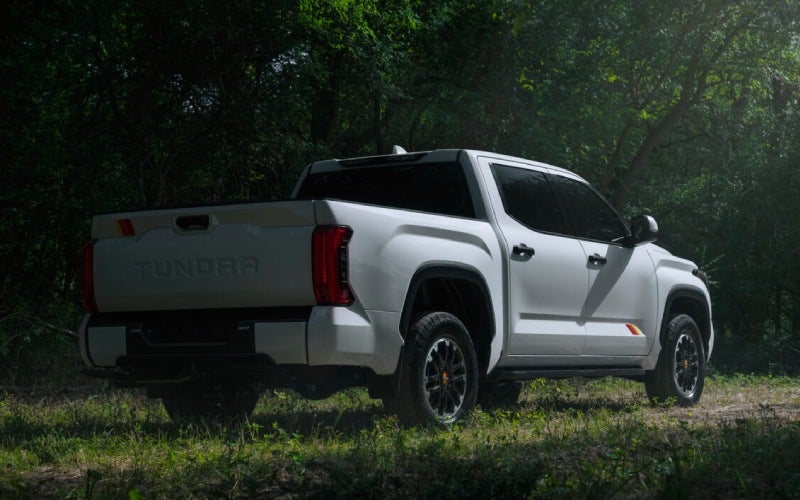
Which 2026 Toyota Tundra bed length is best for daily life near Penrose, CO?

Which 2026 Toyota Tundra bed length is best for daily life near Penrose, CO?

Pueblo Toyota - Which 2026 Toyota Tundra bed length is best for daily life near Penrose, CO?

If you are shopping the 2026 Toyota Tundra and narrowing down trims, powertrains, and colors, one choice will shape your daily experience more than almost any other: bed length. Around Penrose, CO, that decision affects how easily you park at trailheads, stage materials for a weekend project, or back up to a campsite on Phantom Canyon Road. At Pueblo Toyota, we help drivers match their needs to the right Tundra bed so the truck feels effortless on Highway 50 and confident on Fremont County backroads.

What changes between 5.5-ft., 6.5-ft., and 8.1-ft. beds?

Every 2026 Tundra bed is built for real work and real weekends. The standard composite bed is designed to act as a shield against dents, impacts, dings, and rust. No matter the length, Tundra’s multi-link rear suspension with coil springs focuses on ride comfort, towing stability, and refined handling. Where the lengths differ is in how you use the space and how the truck fits your world.

The 5.5-ft. bed is easy to live with if you park in tighter spots in Canon City or navigate crowded lots near Royal Gorge events. The 6.5-ft. bed splits the difference—ample space for lumber and gear with simpler day-to-day maneuvering. The 8.1-ft. bed maximizes usable length for ranch work, longer loads, or hauling bulky items without the tailgate down. All three pair naturally with Tundra’s available tech, like the Panoramic View Monitor (PVM), to make tight spaces less stressful.

5.5-ft. bed: Everyday convenience with weekend readiness

Choose the 5.5-ft. bed if you want a Tundra that feels nimble when you pull into angled street parking in Florence Avenue’s downtown blocks or ease around trailhead vehicles up Shelf Road. It is still a true pickup—just tailored to drivers who split time between commuting and getting out there.

  • Quick parking confidence in busy lots around Canon City and Pueblo
  • Simpler garage fit and easier driveway maneuvering on narrow county roads
  • Plenty of space for mountain bikes, coolers, camping bins, and home-store runs
  • Ideal match for available PVM to see curbs, rocks, and gear as you back in

With Tundra’s available 14-In. Multimedia Touchscreen and 12.3-In. Digital Gauge Cluster, daily use stays intuitive, and the bed’s composite construction stands up to messy jobs without demanding constant babying.

6.5-ft. bed: Balanced space for work, projects, and play

Many Penrose-area shoppers land here because it feels versatile for an active lifestyle. If your weekends swing between runs to the Fremont County transfer station, hauling long boards from the lumber yard, and heading for a dispersed campsite, the 6.5-ft. bed hits a sweet spot.

  • More length for building materials without overhanging the tailgate as often
  • Better staging space for coolers, totes, recovery boards, and a bed-mounted tent
  • Manageable overall length for errands around Pueblo West and downtown Pueblo
  • Confidence when backing a small trailer into tight sites with Trailer Backup Guide With Straight Path Assist

Pair it with the i-FORCE V6 or the i-FORCE MAX hybrid—either way, you benefit from the multi-link rear suspension’s calm, stable ride on washboard roads to Garden Park or CO-115’s rolling stretches.

8.1-ft. bed: Max room for serious hauling

If your days involve fencing supplies, lengthy timber, or larger equipment, the 8.1-ft. bed pays off. The added length reduces how often you need the tailgate down and better organizes long cargo when you are juggling straps and staging locations.

  • Maximized usable floor for ranch, job site, and project materials
  • Less reliance on tailgate-down hauling for long items
  • Predictable load layout when you need fast tie-down routines
  • Pairs smartly with available PVM for visibility in tight farm gates and alleys

Expect a larger truck footprint as a trade-off, but technology softens the edges. With PVM giving a 360-degree view, plus available Trailer Backup Guide With Straight Path Assist, threading into a barn, shop, or campsite feels far simpler than it looks.

Powertrains and towing: How bed length fits the job

The 2026 Tundra offers two powerful powertrains. The i-FORCE twin-turbo V6 delivers 389 hp and 479 lb.-ft. of torque. The i-FORCE MAX twin-turbo V6 hybrid delivers 437 hp and 583 lb.-ft. of torque. Properly equipped, the Tundra offers a max towing capacity of up to 12,000 lbs. If you expect to tow regularly—say, a compact camper to Lake Pueblo or a utility trailer to job sites—both powertrains provide serious confidence. Longer wheelbases that often accompany longer beds can contribute to a planted towing feel, while the multi-link rear suspension supports stability and ride comfort.

Technology ties it all together. Use the 14-In. Multimedia Touchscreen to monitor towing functions, rely on Trailer Backup Guide With Straight Path Assist for painless reversing, and let PVM help you settle the truck and trailer precisely where you want them. Add Toyota Safety Sense™ 2.5 for a layer of driver-assistance confidence on crowded stretches of US-50.

Local fit matters, too. Penrose and Fremont County offer a mix of paved, gravel, and rutted two-tracks where visibility and composure matter. That is where the combination of the composite bed’s resilience and the suspension’s calm demeanor pays off. You get a truck that works hard during the week and makes it easy to scout a new campsite above the Arkansas River on the weekend.

How to confirm the right bed length for your life

There is a simple way to remove guesswork before you choose. A quick measurement session at home and a hands-on check at our store will make your decision feel obvious.

  1. Measure your garage depth and door clearance from the closed door to the back wall.
  2. Note any tight turns into the garage or driveway that could affect approach or exit angles.
  3. List your three most common cargo scenarios, including the length and height of items.
  4. Bring that list to Pueblo Toyota and test load similar items or mock-ups in each bed length.
  5. Back into a space using PVM to feel the difference in sightlines and turning effort.
  6. If you tow, hook up to a comparable trailer and practice a slow reverse with Straight Path Assist.

That brief exercise helps you experience how the truck will fit your routine—parking at popular trailheads, slipping into older alleys near Canon City, or staging gear for a weekend cabin run.

At our store, we can also walk you through accessories that tailor any bed length to your needs. From cargo organization solutions to bed protection, Genuine Toyota Accessories can dial in usability without compromising the composite bed’s built-in toughness.

Why Penrose, CO drivers often choose differently

In cities with wide streets and sprawling lots, max-length setups feel easy. Around Penrose and the Royal Gorge region, the equation changes—older neighborhoods, angled parking, narrow cut-banks at trailheads, and windy days along the river can make visibility and maneuverability top priorities. That is why many area shoppers end up loving the 5.5-ft. or 6.5-ft. beds, especially paired with PVM. That said, if your work truly demands maximum bed floor, the 8.1-ft. bed still makes sense, especially with the visibility and guidance tech Tundra offers.

Whichever way you go, the Tundra foundation stays the same: powerful i-FORCE or i-FORCE MAX engines, a multi-link rear suspension that makes long days less tiring, and technology that turns tight spots into easy wins. Our team at Pueblo Toyota will help you test, measure, and decide with confidence.

Frequently Asked Questions:

Does the composite bed still need a liner for gravel or firewood?

Tundra’s standard composite bed is designed to act as a shield against dents, impacts, dings, and rust. Many owners appreciate that durability as-is. If you prefer added organization or protection, we can help you choose Genuine Toyota Accessories suited to your cargo.

Will Trailer Backup Guide With Straight Path Assist work with any bed length?

Yes. This available driver-assistance technology helps keep your trailer in a straight line as you back up, regardless of bed length. We can demonstrate how it works on our lot before you decide.

How does the 5.5-ft. bed handle home improvement runs around Canon City and Pueblo?

Very well for most weekend projects. The 5.5-ft. bed offers easy maneuverability in tighter lots and alleys, while the composite surface stands up to messy materials. For longer boards, a simple load strategy or accessory support makes quick work of the trip.

Does the longer 8.1-ft. bed make the ride feel stiffer on county roads?

Tundra’s multi-link rear suspension with coil springs focuses on ride comfort and towing stability across configurations. The longer bed will change the truck’s overall footprint, but the suspension remains tuned for composure on paved and unpaved roads around Penrose.

Can Panoramic View Monitor really help at tight trailheads near Shelf Road?

Yes. The available Panoramic View Monitor uses cameras on the front, sides, and rear of the truck to provide a 360-degree view. It can make a tight back-in next to boulders, posts, or other vehicles feel far more manageable.

Ready to find your perfect fit? Visit Pueblo Toyota to compare the 5.5-ft., 6.5-ft., and 8.1-ft. beds side by side. We will help you measure, load mock-ups, and try the available tech so you can see and feel the difference. Bring your gear list, and let us match you with a 2026 Toyota Tundra that fits Penrose, CO life exactly the way you live it.
Request more 2026 Toyota Tundra information

Posted in:

Related Posts

Is the 2026 Toyota Tundra a better fit than the Silverado 1500 for towing near Canon City, CO?

Is the 2026 Toyota Tundra a better fit than the Silverado 1500 for towing near Canon City, CO?

Pueblo Toyota - Is the 2026 Toyota Tundra a better fit than the Silverado 1500 for towing near Canon City, CO? For many truck shoppers near Canon City, CO, the first question is simple: which full-size pickup feels more confident when it is time to tow? The Chevrolet Silverado 1500 brings strong available trailering capability and a wide engine lineup, so it earns a place in the conversation. But for drivers who want towing strength paired with modern response, everyday comfort, and Toyota’s focused truck engineering, the Tundra makes a powerful argument. It is not just about one number on a spec sheet. It is about how the truck feels when accelerating with a trailer, backing into a tight space, managing visibility, and staying comfortable after a long day. Tundra’s biggest advantage for many shoppers is the available i-FORCE MAX twin-turbo V6 hybrid powertrain. With 437 horsepower and 583 lb.-ft. of torque, it delivers strong low-end response that helps the truck feel alert and composed when pulling a load. The standard i-FORCE twin-turbo V6 is also stout, producing 389 horsepower and 479 lb.-ft. of torque. Silverado 1500 offers several engines, including TurboMax™, V8 options, and the Duramax® 3.0L Turbo-Diesel, but Tundra’s hybrid powertrain gives Toyota buyers a distinctive blend of power and smoothness without requiring a diesel choice. For shoppers visiting Pueblo Toyota, that difference often becomes clearer during a test drive. What matters most when comparing towing confidence? Towing confidence is built from several pieces working together. Maximum rating matters, but so do torque delivery, suspension tuning, driver visibility, braking support, camera technology, and the way the cabin keeps important information within view. The Tundra can tow up to 12,000 lbs. when properly equipped, while the Silverado 1500 offers a higher maximum available trailering rating. However, many owners do not tow at the absolute maximum every day. Instead, they want a truck that feels steady with a camper, utility trailer, small equipment trailer, or boat, and that is where Tundra’s overall engineering balance becomes very appealing. Tundra’s Multi-Link Rear Suspension with coil springs is an important part of that feeling. It is designed to improve ride comfort, towing stability, and handling dynamics. On broken pavement, rural access roads, and winding routes that lead toward recreation areas, that composed ride can make a meaningful difference. A truck that feels more settled when empty and confident when loaded is easier to live with. Silverado 1500 remains a capable workhorse, but Tundra’s suspension design gives it a polished character that many drivers notice on the first drive. Why Tundra towing technology is easy to appreciate Backing a trailer can be one of the most stressful parts of towing, especially at storage lots, trailheads, campsites, or crowded loading areas. Tundra’s available Trailer Backup Guide With Straight Path Assist uses sensors and cameras to help keep a trailer in a straight line while reversing. That feature can be especially helpful for drivers who tow occasionally and want extra support when lining up a trailer. Silverado 1500 also offers advanced trailering technology and available camera views, but Toyota’s system is intuitive and well integrated with Tundra’s available display technology. The available Panoramic View Monitor is another major benefit. It uses cameras on the front, sides, and rear of the truck to help provide a 360-degree view of the area around the vehicle. When maneuvering a full-size pickup near a trailer, curb, hitch, post, or garage opening, that added perspective can reduce guesswork. Pair it with the available 14-In. Toyota Audio Multimedia touchscreen, and the camera image is large enough to use comfortably. The available 12.3-In. digital gauge cluster can also show towing functions and other key information, helping drivers stay aware without constantly searching through menus. Key Tundra advantages for towing-focused shoppers Hybrid power: The available i-FORCE MAX powertrain delivers 437 horsepower and 583 lb.-ft. of torque for strong acceleration and confident response. Ride control: The Multi-Link Rear Suspension with coil springs supports comfort, towing stability, and handling dynamics. Backing support: Available Trailer Backup Guide With Straight Path Assist helps make reversing with a trailer feel more manageable. Visibility: Available Panoramic View Monitor provides a helpful 360-degree view around the truck. Durability: The standard aluminum-reinforced composite bed resists dents, impacts, dings, and rust. These advantages matter because towing is rarely isolated from the rest of life. A truck may pull a trailer on Saturday, carry tools during the week, run errands after work, and take family or friends across southern Colorado. Tundra is built to move between those roles naturally. Its cabin feels refined enough for long highway stretches, while its bed and powertrains are ready for demanding tasks. For many shoppers, that complete-package feel is the reason Tundra rises above the Silverado 1500, even in a competitive segment. How does the cabin affect towing comfort? Cabin design matters more than some shoppers expect. When towing, a driver needs clear information, supportive seating, intuitive controls, and technology that does not distract. Tundra’s available 14-In. Toyota Audio Multimedia touchscreen is one of its strongest interior highlights, giving the driver a broad display for navigation, audio, and camera views. Available leather-trimmed seating, available premium audio, and upscale trim choices such as 1794 Edition and Capstone help Tundra feel comfortable enough for long drives while staying practical for truck use. Silverado 1500 also offers a spacious cabin with available advanced screens and connected features, but Tundra’s layout feels especially cohesive. The available 12.3-In. digital gauge cluster can bring safety, towing, navigation, audio, and off-road information into the driver’s line of sight. That can be valuable when traveling between job sites, heading toward the mountains, or navigating local routes while pulling a trailer. Shoppers serving Florence, Penrose, and Canon City often want a truck that is easy to use, not just powerful on paper, and Tundra delivers that everyday usability well. Frequently Asked Questions: Does the Tundra tow as much as the Silverado 1500? The Silverado 1500 offers a higher maximum available trailering rating, while Tundra can tow up to 12,000 lbs. when properly equipped. The better choice depends on how much weight you actually tow and how much you value Tundra’s hybrid power, suspension comfort, and available towing assistance features. Is the i-FORCE MAX hybrid powertrain good for towing? Yes. The available i-FORCE MAX twin-turbo V6 hybrid powertrain produces 437 horsepower and 583 lb.-ft. of torque, giving Tundra strong response for towing, merging, climbing, and passing. Its electric-motor assistance contributes to the confident feel that many drivers want when pulling a trailer. Which truck is better for everyday driving? For many shoppers, Tundra is the easier truck to enjoy daily because of its Multi-Link Rear Suspension, comfortable cabin, available large touchscreen, and standard composite bed. Silverado 1500 is capable, but Tundra feels especially well rounded for drivers who split time between towing, commuting, hauling, and family use. If your search is centered on maximum trailering above all else, Silverado 1500 deserves consideration. But if you want a truck that combines serious towing ability with hybrid power, smart trailering support, a durable composite bed, refined ride quality, and a cabin that feels ready for long days, Tundra is the stronger recommendation. It brings capability without feeling one-dimensional, and that is exactly what many Colorado truck owners need. Request more 2026 Toyota Tundra information

Does the 2026 Toyota Tundra or 2026 Ford F-150 Deliver Better Real-World Towing Confidence near Canon City, CO?

Does the 2026 Toyota Tundra or 2026 Ford F-150 Deliver Better Real-World Towing Confidence near Canon City, CO?

Pueblo Toyota - Does the 2026 Toyota Tundra or 2026 Ford F-150 Deliver Better Real-World Towing Confidence near Canon City, CO? The question Canon City drivers keep asking When comparing the 2026 Toyota Tundra and the 2026 Ford F-150, one question rises to the top for many Colorado shoppers: Which truck provides better real-world towing confidence on Highway 50, around the Royal Gorge area, and across the high plains? Spec sheets are useful, but they do not tell the whole story. Confidence is about control, predictability, and how the truck feels with a hitch on the ball—especially when crosswinds, traffic merges, and rolling grades all show up in the same mile. The 2026 Toyota Tundra brings a few decisive traits to this conversation. First, its standard multi-link coil-spring rear suspension helps the back of the truck stay planted over broken pavement, which often reduces the fore-aft “chop” drivers feel through the seat when towing an empty or lightly loaded trailer. Second, the available i-FORCE MAX twin-turbo V6 hybrid delivers 437 hp and 583 lb-ft of torque with strong low-end response. That combination means smooth, confident pull-aways from boat ramps and steady climbs out of canyon areas without the hunting and pecking some drivers dislike on long grades. How the tech supports the tow Technology is not a substitute for skill, but it can amplify it. The Tundra’s available Panoramic View Monitor gives multiple angles, helping you situate the truck and trailer in tight trailhead lots or line up a coupler quickly. The available Trailer Backup Guide With Straight Path Assist uses cameras and sensors to help you keep a trailer moving where you intend—hugely helpful when you are threading a small camper into a side yard or backing a boat into a narrow driveway near the Arkansas River. Inside, the available 12.3-in. digital gauge cluster puts towing data front and center, while the available 14-in. Toyota Audio Multimedia touchscreen offers a clean, intuitive interface so you can keep attention on mirrors and surroundings. Ford’s 2026 F-150 brings capable tech of its own, including helpful camera views and trailer guidance systems. Many drivers appreciate its broad engine roster and strong tow ratings. But the day-to-day sensation with a trailer—the way the rear end settles over expansion joints, the smoothness of throttle response at parking-lot speeds, and the calm steering feel at 65 mph—regularly draws praise toward Tundra. That ride-and-control balance is where Toyota’s coil-spring rear and sturdy, fully boxed frame pay off. Numbers vs. feel: what matters more on Colorado roads Anyone towing near Canon City, CO knows that ratings do not capture everything. Sudden crosswinds near the Royal Gorge Bridge, traffic pockets on Highway 50, and endless surface changes ask a lot of a truck’s suspension and electronic stability systems. With the Tundra’s standard multi-link coil-spring rear suspension, the truck tends to keep its composure when the surface gets choppy. Pair that with the hybrid’s electric assist and the 10-speed automatic’s smart ratios, and you get controlled launch, easy low-speed modulation, and predictable downshifts on gentle descents—traits that minimize fatigue during longer tows. The F-150’s max tow figures are impressive on paper, and if your routine is heavy, straight-ahead highway pulls, that can be a persuasive spec. But towing confidence around here is equally about how the truck dampens oscillations, how quickly it recovers from a gust, and whether assistance systems are easy to access when you need them. In those areas, Tundra’s tuning and interface cohesion shine. Common towing scenarios where Tundra stands out Think about three everyday use cases Canon City owners mention during test drives and walkarounds—each highlights a different strength of the Tundra’s setup and available tech. Boat ramps and angled driveways: The i-FORCE MAX hybrid’s instant electric assist helps control momentum at tip-in, so backing down a slick ramp or easing into an angled driveway feels precise rather than jerky. Crosswinds on open stretches: The standard coil-spring rear works with stability systems to keep the truck calmer when gusts roll across open arroyos—owners say less correction is needed. Narrow trailhead lots: The available Panoramic View Monitor and Trailer Backup Guide With Straight Path Assist make short work of tight approaches and tricky reverse maneuvers. What about payload and bed durability? It is worth noting bed construction. Tundra’s standard aluminum-reinforced composite bed is a big deal if you load tools, blocks, or gear regularly. It shrugs off dents and resists rust, which matters when you are hauling wet straps, muddy recovery boards, or landscaping materials after a run to a local yard. F-150’s bed solutions are versatile and well supported by accessories, but owners who prefer to work a bed without babying it tend to appreciate the composite approach—especially over time. Payload capacity considerations are valid for both trucks, and the right answer depends on the trailer tongue weights and gear you regularly carry. The best step is to match your common trailer setup to the correct configuration rather than chasing a single max figure. Tundra’s helpful in-cabin towing displays and straightforward menus make it simple to watch the data that matters. Frequently Asked Questions: Does the 2026 Toyota Tundra offer trailer guidance tech comparable to Ford’s systems? Yes. The Tundra’s available Trailer Backup Guide With Straight Path Assist uses cameras and sensors to help you steer a trailer intuitively, and the available Panoramic View Monitor adds multiple vantage points for tight maneuvers. How does the Tundra’s hybrid feel when towing at low speeds? Very controlled. The i-FORCE MAX hybrid’s electric assist smooths initial throttle input, which can reduce lurching and provide more precise placement when backing into a campsite or boat slip. Is the Tundra’s ride noticeably different from most F-150 trims? Many shoppers feel it is. The Tundra’s standard multi-link coil-spring rear tends to reduce hop and bobble on patched or broken surfaces, which translates to more stable trailer behavior and less driver fatigue. What should I bring to a towing-focused test drive? If possible, bring your trailer or a similar load. That way you can evaluate launch, braking feel, stability at speed, and the clarity of the truck’s towing displays with a setup that mirrors your real life. Final take for Canon City-area drivers Both trucks are capable, but if your daily routes include Highway 50’s rolling grades, gusty crosswinds near the river, and tight turnarounds at trailheads, the Tundra’s composure, torque delivery, and integrated towing tech create a margin of confidence you will feel. It is not just about maximum numbers—it is about how the truck behaves when the pavement and the wind throw you a curve at the same time. Ready to compare them back to back and hook up a trailer for a proper test? Pueblo Toyota can walk you through towing features, setup best practices, and configuration choices, serving Florence, Penrose, and Canon City with a team that understands Colorado’s roads and the real-world demands of truck ownership. Request more 2026 Toyota Tundra information

Why the 2026 Toyota Tundra’s Multi-Link Rear Suspension Just Works for Pueblo, CO Drivers

Why the 2026 Toyota Tundra’s Multi-Link Rear Suspension Just Works for Pueblo, CO Drivers

Pueblo Toyota - Why the 2026 Toyota Tundra’s Multi-Link Rear Suspension Just Works for Pueblo, CO Drivers If you have ever driven a full-size truck that hops or jitters over cracked pavement, you know why suspension design matters. The 2026 Toyota Tundra answers that with a multi-link rear suspension using coil springs—an approach that transforms how a tough, body-on-frame truck can feel in daily use around Pueblo, CO. It is controlled and planted on I-25, calm over expansion joints through town, and reassuring when a dirt road to your favorite trail starts to ripple. Let’s unpack what makes this setup special and how it benefits real-world driving on the Front Range. What Multi-Link With Coil Springs Changes Day to Day Traditional leaf springs have served trucks well for decades, but they can introduce head-toss and bounce when a bed is unladen. Tundra’s multi-link rear with coil springs gives engineers more tuning variables—arm length, bushing compliance, and shock calibration—so the truck can maintain both control and comfort. The result is a pickup that keeps its composure over rough patches near downtown Pueblo and remains steady when road surfaces tilt or undulate on the way to Lake Pueblo State Park. This suspension also plays well with Tundra’s strong frames and powertrains. When you accelerate hard with the i-FORCE or i-FORCE MAX system, the geometry helps the rear stay settled so you feel the torque surge forward without a lot of squat. And when you are towing, the extra lateral control you gain from the multi-link layout can help the truck track straight—welcome peace of mind when crosswinds pick up along open stretches south of Colorado Springs. How It Benefits Towing and Payload Tundra’s capability numbers are impressive—up to 12,000 pounds of max towing, and up to 1,850 pounds of max payload when properly equipped. What turns capability into confidence is control. The multi-link rear suspension is a big reason Tundra feels stable hooking up a boat or camper, especially when paired with available Trailer Backup Guide With Straight Path Assist. Backing down a ramp or reversing into a campsite near Pueblo Reservoir becomes a more deliberate, less stressful process, largely because the chassis responds predictably. Likewise, the composite bed—available in 5.5-, 6.5-, and 8.1-foot lengths—adds durability without excess weight. That matters for suspension performance too: less unsprung and overall mass helps the shocks and springs handle undulating surfaces, whether you are carrying lumber for a weekend project or gear for a family getaway. Technology That Rounds Out the Ride Good suspension is the foundation, but Tundra layers in helpful tech. The available Panoramic View Monitor gives a 360-degree perspective, which is surprisingly useful when you are aligning to a trailer or squeezing into a tight spot downtown. The available 12.3-inch digital gauge cluster complements that by placing towing status, safety alerts, and off-road info in clear view. Together, these systems pair nicely with the poised ride to make long days at the wheel easier on you and your passengers. Inside, the available 14-inch Toyota Audio Multimedia touchscreen keeps navigation, media, and vehicle settings front and center. Wireless Apple CarPlay and Android Auto compatibility help reduce cable clutter. After a few weeks of ownership, you notice that fewer small frictions—a cable here, a guess at a safety alert there—means you arrive more relaxed, even if your schedule takes you all over town. Real-World Scenarios Where the Difference Shows A few everyday moments make the multi-link difference clear. Turn onto a rutted alley behind your shop—Tundra stays composed and avoids excessive bed hop. Transition from city streets to the highway—body motions settle quickly instead of lingering. Navigate a gravel access road near the Arkansas River—rear-end chatter is reduced, and steering input stays more precise. It is not just ride comfort; it is consistency and control that help you focus on the task at hand. And if you choose a model with the i-FORCE MAX hybrid powertrain, brisk torque off the line complements the controlled suspension feel. Pulling away from stoplights with a loaded bed no longer feels like a clumsy dance—power delivery meshes with chassis balance to keep the truck on an even keel. Who Should Prioritize This Setup If you split your time between work and family duties, haul on weekends, and drive varied surfaces around the Front Range, you will likely appreciate the current Tundra tune. Contractors and tradespeople who spend a lot of time in the cab will notice less fatigue at day’s end. Families will feel the smoother ride in the back seat. And weekend explorers who frequent trailheads west of town will enjoy a truck that stays settled on the way in and on the way out. We also hear positive feedback from shoppers cross-shopping trucks with leaf-spring rears. While every design has tradeoffs, Tundra’s approach balances capability with comfort in a way that feels modern and considerate of how most owners actually use their trucks—especially across the mix of streets, highways, and unpaved roads that define our region. How to Test This for Yourself Set up a test route that samples a bit of everything: a couple of downtown turns, a quick hop on I-25, and a short stretch of rough pavement or a maintained gravel road. If you are planning to tow, ask to explore the available trailer-assist features and bring your hitch height measurements. Pay attention to how the rear end behaves over successive bumps and how quickly the body settles after a larger undulation. Check noise isolation on coarse pavement, and note steering response in a quick lane change. The more your test drive mirrors your routine, the better your decision will be. When you are ready to dial in a build, you can tailor the experience further with TRD packages that add hardware and tuning aimed at off-pavement driving. In all cases, the multi-link rear suspension forms a confident base that gives those upgrades room to shine. Frequently Asked Questions: Does the 2026 Tundra’s multi-link rear suspension reduce bed bounce when unloaded? Compared to traditional leaf-spring setups, many drivers report the Tundra’s multi-link with coil springs feels more settled and controlled on imperfect pavement when the bed is empty. Will the ride quality still feel stable with a trailer attached? Yes, the geometry provides reassuring lateral control, and when combined with available towing tech—like Trailer Backup Guide With Straight Path Assist—Tundra inspires confidence under load. Can I pair the suspension with off-road upgrades? Absolutely. Tundra’s TRD family options, including the TRD Pro trim, integrate specialized shocks, wheels, and tires that build on the multi-link foundation for increased control off pavement. At Pueblo Toyota, we make it simple to evaluate these differences side by side and set up a drive route that reflects your day-to-day. Whether you prioritize the i-FORCE MAX powertrain’s torque, the available Panoramic View Monitor, or a specific TRD configuration, our team is here to help you sort the must-haves from the nice-to-haves and assemble a truck that makes sense for your life. We are proud of our role serving Pueblo, Florence, and Penrose with clear information and a straightforward process that respects your time. The 2026 Toyota Tundra’s multi-link rear suspension is not a spec to gloss over—it is a major contributor to how the truck feels and performs. If ride composure, towing stability, and day-to-day comfort matter to you as much as raw numbers, it is worth a close look, a thoughtful test drive, and a conversation with a product specialist who understands the Front Range. That is where we come in, and that is where your next great truck decision can start. If you have a current vehicle to trade, an online estimate helps you see the big picture early. From there, we can walk you through grades, bed lengths, cab styles, and the technology packages that best match your use case. Choosing a truck should feel exciting and clear—and with the 2026 Tundra, it can be both. Stop by when you are ready to see how this suspension design, paired with modern towing tech and smart cabin integration, adds up to a truck that simply feels right for Pueblo. One drive is often all it takes to feel the difference. When you reach out, mention which surfaces you want to sample on your drive—city streets, highway, or a maintained gravel road—and we will map out a route to match. That way, you will know exactly how Tundra behaves where you will drive it most. In short, the 2026 Toyota Tundra’s multi-link rear suspension turns everyday roads into a demonstration of balance: strength without harshness, capability without compromise, and a refined ride that keeps up with the rest of the truck’s modern technology. That is a combination we value, and we think you will, too. Pueblo Toyota Request more 2026 Toyota Tundra information